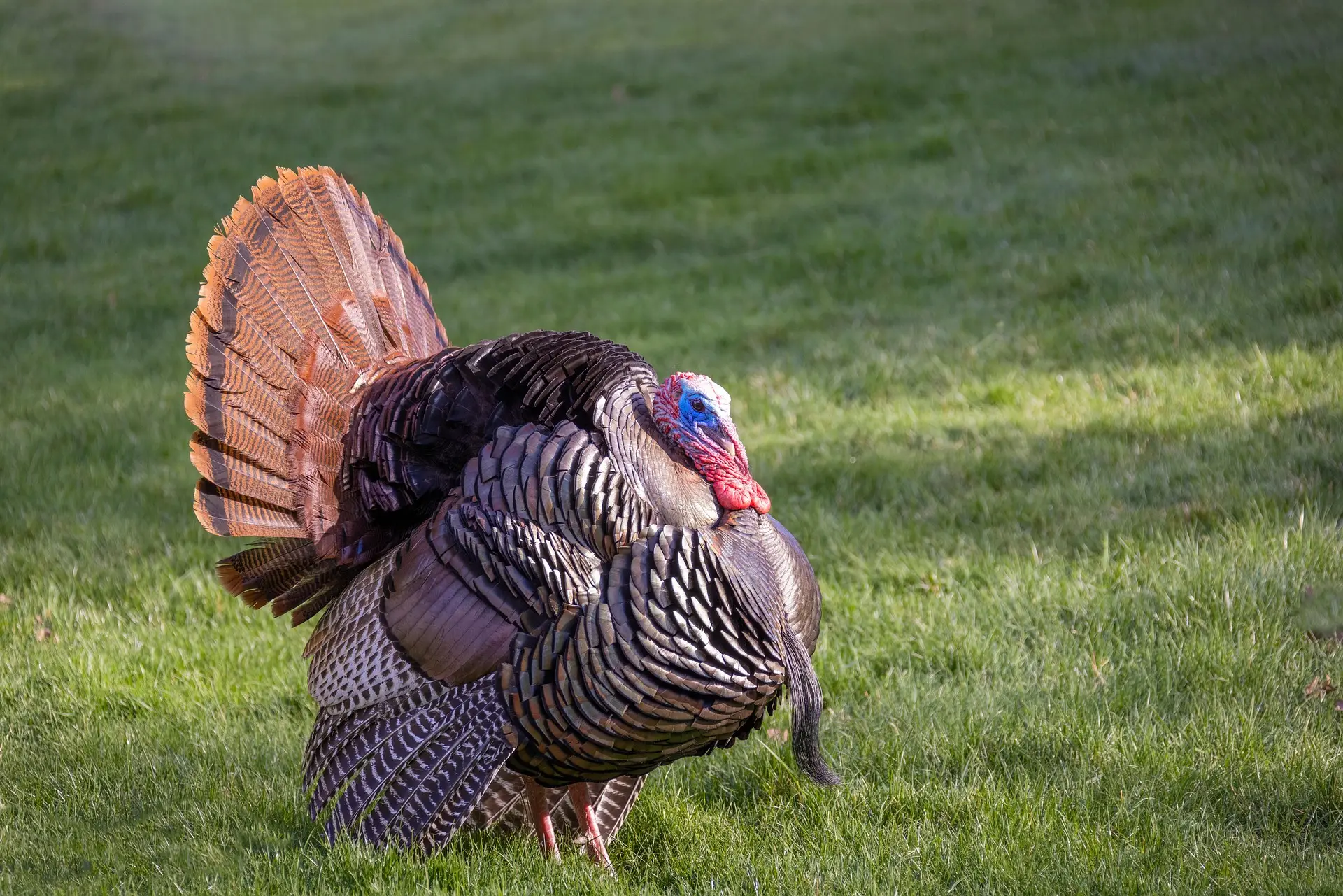
Turkey Sound - Gobbles, Calls & Wild Turkey Vocalizations Sound
Discover the iconic turkey sound, from the classic gobble to soft purrs and yelps. These authentic turkey sounds showcase the diverse vocal repertoire of one of North America's most recognizable game birds.
Characteristics of Turkey Sound - Gobbles, Calls & Wild Turkey Vocalizations
Habitat
Forests, woodlands, grasslands, and agricultural areas
Diet
Omnivore - seeds, nuts, berries, insects, and small vertebrates
Lifespan
3-5 years in the wild, up to 10 years in captivity
Weight
5-11 kg for males, 3-5 kg for females
Length
100-125 cm body length, 125-144 cm wingspan
Region
North America, introduced to other regions worldwide
Turkey Sound Characteristics
The turkey sound is one of the most distinctive and varied bird vocalizations in North America. From the powerful gobbling turkey sound of displaying males to the gentle purring turkey sound of contented birds, wild turkeys use an extensive range of turkey sounds to communicate. Each turkey sound serves a specific purpose in their social structure, from the aggressive cutting turkey sound used in confrontations to the soft clucking turkey sound that maintains flock cohesion. Understanding turkey sounds is essential for wildlife observation, hunting, and appreciating these magnificent birds.
Gobble
The gobble is the most iconic turkey sound, produced exclusively by male turkeys (toms). This powerful turkey sound is created by forcing air through the trachea while the neck is extended, producing the characteristic "gobble-obble-obble" sound. The gobbling turkey sound serves multiple purposes: attracting hens during breeding season, announcing territory to rival males, and responding to loud noises. This distinctive turkey sound can carry over a mile in open terrain and is most frequently heard at dawn during spring mating season. The gobble turkey sound is so powerful it can reach 90-100 decibels at close range.
200-1500 Hz
85-100 decibels
1-3 seconds
During breeding season, at dawn and dusk, in response to loud noises, and when establishing dominance
Yelp
The yelp is a versatile turkey sound used by both males and females, though it is most commonly associated with hens. This rhythmic turkey sound consists of a series of single-note calls that sound like "yelp, yelp, yelp" or "kee-ow, kee-ow." The yelping turkey sound serves as a basic communication call used to maintain contact with flock members, locate other turkeys, and during courtship. Hens use yelping turkey sounds to call to toms during breeding season, while toms may yelp when searching for hens. The yelp turkey sound varies in pitch, volume, and cadence depending on the bird's emotional state and intent.
400-2000 Hz
70-85 decibels
0.5-1 second per note
Throughout the day for flock communication, during breeding season, and when searching for other turkeys
Cluck
The cluck is a short, sharp turkey sound used for close-range communication within the flock. This simple turkey sound is a single-note call that sounds like "cluck" or "putt," used by both males and females. The clucking turkey sound serves multiple purposes: maintaining contact while feeding, signaling contentment, and as a mild alarm call. When turkeys are relaxed and feeding peacefully, you'll often hear soft clucking turkey sounds as they communicate with nearby flock members. The cluck turkey sound can also become more rapid and urgent when birds detect something unusual, transitioning into a "putt" alarm call.
300-1200 Hz
60-75 decibels
0.1-0.3 seconds
While feeding, moving through cover, maintaining flock contact, and as a mild alert
Purr
The purr is a soft, rolling turkey sound that indicates contentment and relaxation. This gentle turkey sound is produced by both males and females and sounds like a continuous, vibrating "purrrrr" similar to a cat's purr but with a more rattling quality. The purring turkey sound is most commonly heard when birds are feeding peacefully, preening, or resting comfortably. This soothing turkey sound helps maintain a calm atmosphere within the flock and signals that no threats are present. The purr turkey sound is quite different from alarm calls and demonstrates the birds' capacity to express emotional states through vocalizations.
200-800 Hz
50-65 decibels
1-5 seconds, often continuous
While feeding contentedly, preening, resting, and in relaxed social situations
Cutting
Cutting is an aggressive, excited turkey sound consisting of loud, sharp, erratic clucks delivered in rapid succession. This intense turkey sound is primarily produced by excited or agitated hens and sounds like "cut-cut-cut-cut-cut" with irregular spacing. The cutting turkey sound indicates heightened excitement, aggression, or competition, often heard when hens are competing for a tom's attention or when birds are agitated. This sharp turkey sound can also occur when turkeys are disturbed or when dominant hens are asserting their position in the flock hierarchy. The cutting turkey sound is louder and more irregular than normal clucking.
400-1800 Hz
75-90 decibels
0.1-0.2 seconds per note, rapidly repeated
During competitive situations, when agitated, excited hens competing for toms, or when establishing dominance
Kee-Kee Run
The kee-kee run is a distinctive turkey sound produced by young turkeys (poults) and occasionally by adult hens. This lost call turkey sound starts with high-pitched whistles ("kee-kee-kee") and often transitions into yelps. The kee-kee run turkey sound is primarily a locator call used by separated poults trying to reunite with their flock or mother. This plaintive turkey sound triggers protective responses from adult birds and helps scattered flocks regroup. The kee-kee turkey sound is most commonly heard in fall when young birds are becoming independent but still maintaining family group bonds.
1000-3000 Hz (whistles), 400-2000 Hz (yelps)
65-80 decibels
2-5 seconds total
When young turkeys are separated from flock, during fall regrouping, and by lost birds seeking contact
Putt
The putt is a sharp, loud alarm turkey sound that signals immediate danger. This urgent turkey sound is a single, explosive note that sounds like "putt!" or "put!" and is produced by both males and females. The putt alarm turkey sound causes the entire flock to become instantly alert and often triggers flight responses. This warning turkey sound is typically given when a turkey spots a predator, hunter, or other serious threat. The putt turkey sound is one of the most important survival vocalizations, and hearing it means the bird has detected danger and is warning others while preparing to flee.
300-1500 Hz
80-95 decibels
0.1-0.2 seconds
When detecting immediate threats, predators, hunters, or serious danger
Tree Yelp
The tree yelp is a soft, sleepy turkey sound made by turkeys roosting in trees at dawn and dusk. This gentle turkey sound consists of soft, muffled yelps that sound more subdued than daytime yelps. The tree yelp turkey sound helps roosting birds maintain contact with flock members in the darkness and signals their location as they prepare to fly down at dawn. This peaceful turkey sound is often the first vocalization heard in the morning as turkeys wake up and begin communicating before leaving their roosts. The tree yelp turkey sound has a distinctive quality that experienced turkey enthusiasts can easily recognize.
400-1600 Hz
55-70 decibels
0.5-1 second per note
While roosting at dawn and dusk, before flying down from trees, and during early morning communication
Fighting Purr
The fighting purr is an aggressive turkey sound produced by males during confrontations with rival toms. This intense turkey sound is a loud, aggressive version of the contentment purr, with a harsher, more forceful quality. The fighting purr turkey sound is often accompanied by physical displays including puffed-up feathers, spread tail fans, and wing dragging. This threatening turkey sound signals readiness to fight and is used to intimidate rivals during breeding season competition. The fighting purr turkey sound can escalate into actual physical combat if neither bird backs down, making it one of the most aggressive turkey vocalizations.
200-1000 Hz
70-85 decibels
2-4 seconds
During male-male confrontations, breeding season competition, and territorial disputes
Interesting Turkey Sound - Gobbles, Calls & Wild Turkey Vocalizations Sound Facts
The gobbling turkey sound can be triggered by loud noises like thunder, car doors, or even owl hoots
Wild turkeys can recognize individual flock members by their unique turkey sound signatures
The turkey sound repertoire is learned partly through imitation, with young birds copying adult vocalizations
Male turkeys produce the gobble turkey sound using a specialized vocal organ called the syrinx
The cutting turkey sound is so distinctive that experienced hunters can identify individual hens by their calling patterns
Interesting Facts about Turkey Sound - Gobbles, Calls & Wild Turkey Vocalizations Sound
The male turkey sound gobble can be heard up to a mile away in ideal conditions
Turkeys produce over 28 different types of turkey sounds for various communication purposes
The gobbling turkey sound is primarily used by males during breeding season to attract females
Baby turkeys can recognize their mother's unique turkey sound within hours of hatching
The turkey sound repertoire includes gobbles, yelps, purrs, clucks, and cutting calls
Wild turkey sounds differ significantly from domestic turkey vocalizations
Female turkeys use specific yelping turkey sounds to call their poults
The turkey sound intensity and frequency increase during spring mating season
FAQs about Turkey Sound - Gobbles, Calls & Wild Turkey Vocalizations Sound
Find answers to all your questions about Turkey Sound - Gobbles, Calls & Wild Turkey Vocalizations sounds
Q What does a turkey sound like?
A turkey sound is most recognizable as the iconic gobble produced by male turkeys, which sounds like 'gobble-obble-obble' and can be heard up to a mile away. However, the turkey sound repertoire is much more diverse than just gobbling. Turkeys produce yelps that sound like 'kee-ow, kee-ow,' used for general communication between flock members. The clucking turkey sound is a short 'cluck' or 'putt' used for close-range contact. Turkeys also make purring turkey sounds when content, which sound like a soft, rolling 'purrrrr.' The cutting turkey sound is a series of loud, erratic clucks used by excited or agitated hens. Young turkeys produce a distinctive kee-kee turkey sound, a high-pitched whistle used when separated from the flock. The specific turkey sound you hear depends on the bird's sex, age, and behavioral context.
Q Why do turkeys gobble?
Turkeys gobble for several important reasons related to breeding and territory. The gobbling turkey sound is produced exclusively by male turkeys (toms) and serves primarily as a mating call during spring breeding season to attract female turkeys (hens). The powerful gobble turkey sound announces the tom's presence and location to potential mates while simultaneously warning rival males to stay away from his territory. Male turkeys also produce gobbling turkey sounds in response to loud noises—thunder, car doors, crows calling, or even owl hoots can trigger spontaneous gobbles. This reflexive gobbling turkey sound may serve to assert dominance or simply be an automatic response to startling sounds. The gobble turkey sound is most frequent at dawn during spring mating season when toms are most actively seeking hens. The impressive volume and carrying distance of the gobbling turkey sound—up to a mile in open terrain—makes it one of nature's most effective long-distance communication calls.
Q Do female turkeys make sounds?
Yes, female turkeys (hens) make many turkey sounds, though they do not gobble like males. The most common hen turkey sound is the yelp, a series of rhythmic calls that sound like 'kee-ow, kee-ow' used for flock communication and during breeding season to call to toms. Hens produce clucking turkey sounds for close-range contact while feeding and moving through cover. The cutting turkey sound is primarily a hen vocalization—loud, sharp, erratic clucks that indicate excitement, agitation, or competition with other hens. Hens make soft purring turkey sounds when content and feeding peacefully. Mother hens use specific assembly turkey sounds to call their poults, and they produce alarm putts when detecting danger. The tree yelp turkey sound is commonly made by hens roosting at dawn and dusk. While hen turkey sounds are generally softer and less dramatic than the male gobble, they are equally important for turkey communication and social structure.
Q What is the difference between wild and domestic turkey sounds?
Wild turkey sounds differ significantly from domestic turkey vocalizations in several ways. Wild turkeys produce a much more diverse and complex turkey sound repertoire, including gobbles, yelps, purrs, clucks, cutting, and various alarm calls, all used for specific communication purposes. The wild turkey sound is generally sharper, more varied, and more purposeful than domestic turkey calls. Domestic turkeys, bred for meat production, have been selectively bred in ways that have affected their vocalizations—their turkey sounds tend to be less varied and more monotonous. The gobble turkey sound of wild toms is more powerful and resonant than domestic turkey gobbles. Wild turkey sounds are also more context-specific, with birds using different calls for different situations, while domestic turkeys often produce more generalized vocalizations. The wild turkey sound reflects their need for sophisticated communication in natural environments with predators and complex social structures, while domestic turkey sounds reflect generations of breeding that prioritized growth over natural behaviors.
Q When is the best time to hear turkey sounds?
The best time to hear turkey sounds is during spring breeding season (March through May in most regions) when male turkeys are most vocally active. During this period, the gobbling turkey sound is most frequent, especially at dawn when toms gobble from their roosts and throughout the morning as they search for hens. Early morning, from about 30 minutes before sunrise to mid-morning, produces the most turkey sounds as birds leave their roosts and begin daily activities. You'll also hear increased turkey sounds at dusk as birds prepare to roost for the night. Fall is another good time for turkey sounds, particularly the kee-kee run calls of young birds and assembly yelps as flocks regroup. Throughout the year, you can hear various turkey sounds like clucks, purrs, and yelps as birds go about daily activities, but these are generally softer and less frequent than spring breeding season vocalizations. Weather also affects turkey sounds—turkeys are often more vocal on calm, clear days than during windy or rainy conditions.
Q Can turkeys recognize individual birds by their sounds?
Yes, research suggests that turkeys can recognize individual birds by their unique turkey sound signatures. Each turkey produces slightly different turkey sounds with subtle variations in pitch, tone, rhythm, and quality that serve as vocal fingerprints. Mother turkeys can identify their specific poults' turkey sounds even in large mixed flocks, allowing them to maintain family bonds and provide targeted care. Within turkey flocks, birds appear to recognize familiar individuals by their turkey sounds, which helps maintain social hierarchies and flock cohesion. Dominant toms may recognize rival males by their gobbling turkey sounds, allowing them to assess competition without visual contact. Hens can distinguish between the gobble turkey sounds of different males, potentially using these vocalizations to assess male quality when selecting mates. This individual recognition through turkey sounds is particularly important for maintaining the complex social structures that characterize wild turkey flocks and demonstrates their sophisticated communication abilities.
Q What does it mean when a turkey makes a putt sound?
When a turkey makes a putt sound, this sharp alarm turkey sound means the bird has detected immediate danger and is warning the flock. The putt turkey sound is a single, explosive note that sounds like 'putt!' or 'put!' and signals that the turkey has spotted a predator, hunter, or other serious threat. This urgent turkey sound causes the entire flock to become instantly alert, stop feeding, and prepare to flee. The putt alarm turkey sound is often followed by rapid departure—birds may run quickly or take flight depending on the severity of the threat. For hunters, hearing a putt turkey sound means they've been detected and the bird is alarmed, significantly reducing chances of a successful approach. The putt turkey sound is one of the most important survival vocalizations in the turkey repertoire, serving as an effective early warning system that helps protect the entire flock. If you hear a putt turkey sound while observing turkeys, the birds have likely spotted you and are preparing to leave the area.
Q How do baby turkeys learn their sounds?
Baby turkeys (poults) learn their turkey sounds through a combination of instinct and imitation, beginning even before they hatch. Poults can hear their mother's turkey sounds through the eggshell in the final days before hatching, beginning the learning process of species-specific vocalizations. Immediately after hatching, poults produce instinctive peeping turkey sounds for contact with their mother and siblings. As they grow, young turkeys learn more complex turkey sounds by listening to and imitating adult birds in their flock. Mother hens actively teach their poults by producing specific turkey sounds in different contexts—alarm calls when danger appears, assembly calls to gather the brood, and contentment sounds when conditions are safe. Young turkeys practice their turkey sounds constantly, gradually refining their vocalizations from simple peeps to more complex yelps, clucks, and other adult calls. Male poults begin attempting to gobble at several months of age, though their early gobbling turkey sounds are weak and poorly formed compared to adult toms. By their first spring, young males have developed full gobbling turkey sound capabilities through months of practice and maturation.
Most Downloaded birds Animal Sounds
Discover our most popular birds animal sounds