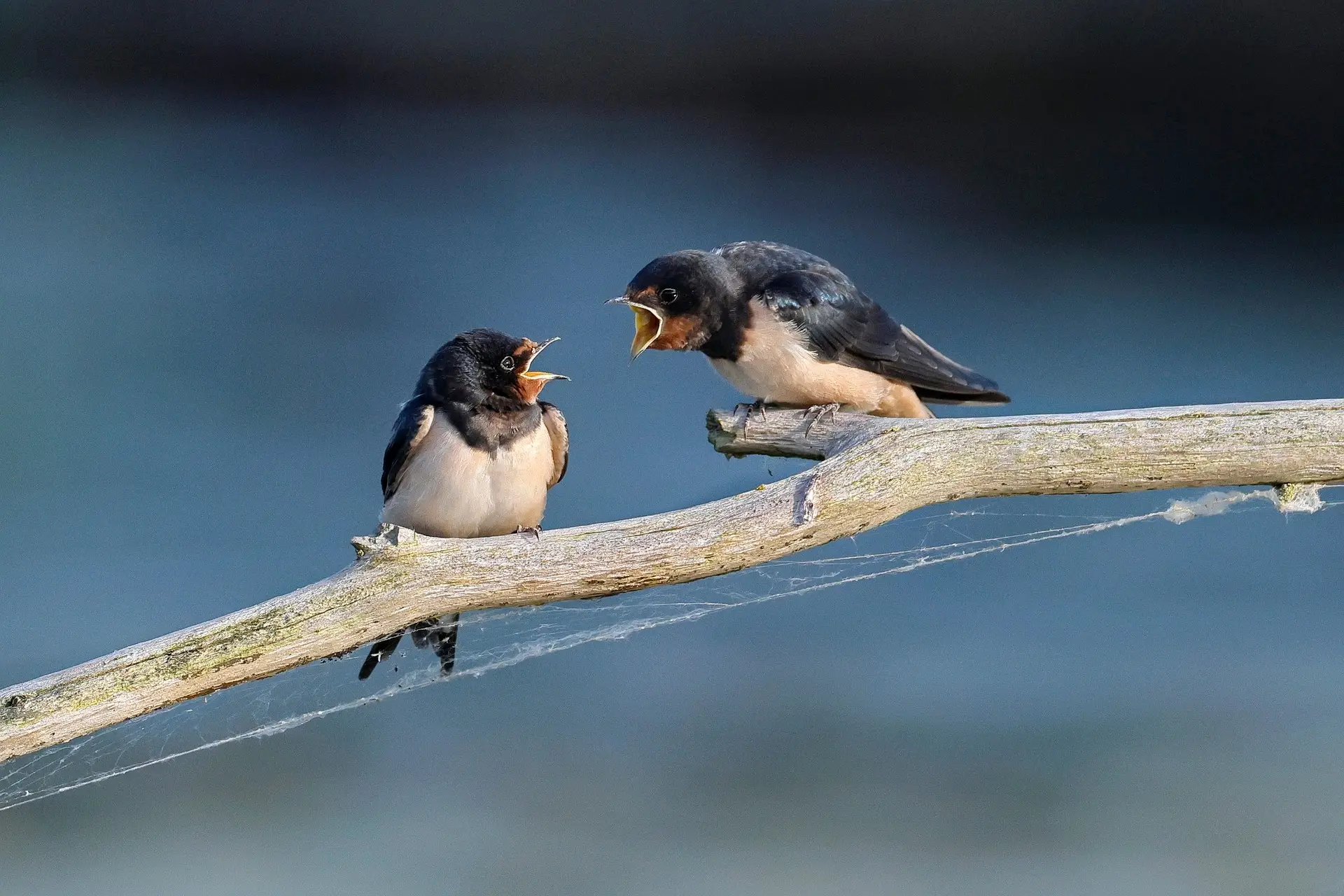
Swallow Sound - Cheerful Chirps & Twittering Calls Sound
Experience the delightful swallow sound, from cheerful twittering to alarm calls. These authentic swallow sounds capture the lively vocalizations of these graceful aerial insectivores and beloved harbingers of spring.
Characteristics of Swallow Sound - Cheerful Chirps & Twittering Calls
Habitat
Open areas near water, farmlands, meadows, and human structures for nesting
Diet
Insectivore - flying insects caught in aerial pursuit
Lifespan
4-8 years in the wild
Weight
15-25 grams depending on species
Length
15-20 cm body length, 30-35 cm wingspan
Region
Worldwide except Antarctica, many species are long-distance migrants
Swallow Sound Characteristics
The swallow sound is characterized by cheerful, energetic vocalizations that reflect these birds' active, social nature. From the continuous twittering swallow sound at colonial nesting sites to the sharp alarm swallow sound when predators approach, these aerial insectivores use diverse vocalizations for communication. Each swallow sound serves specific purposes in their complex social lives—maintaining pair bonds, coordinating flock movements, defending territories, and caring for young. The swallow sound is an integral part of spring and summer soundscapes wherever these birds nest, creating a lively acoustic backdrop to their graceful aerial displays.
Twittering Song
The twittering song is the most characteristic swallow sound, consisting of a continuous stream of cheerful, warbling notes. This pleasant swallow sound is produced primarily by males during breeding season but can be heard from both sexes throughout the nesting period. The twittering swallow sound includes a variety of chirps, warbles, and liquid notes delivered in rapid succession, creating a bubbly, energetic vocalization. This swallow sound is most commonly heard at dawn and dusk when birds are most socially active. The twittering swallow sound serves multiple functions: attracting mates, announcing territory, and maintaining social bonds within colonies. Colonial nesting swallows create a chorus effect with overlapping twittering swallow sounds that can be heard from considerable distances.
2000-8000 Hz
65-80 decibels
2-10 seconds of continuous twittering
During breeding season, at dawn and dusk, near nesting sites, and during social interactions
Contact Call
The contact call is a simple, short swallow sound used for maintaining communication between flock members and family groups. This basic swallow sound consists of single or repeated chirps that sound like "vit" or "chit-chit." The contact call swallow sound helps birds keep track of each other's locations during flight and while foraging. Migrating swallows use contact call swallow sounds extensively to maintain flock cohesion during long-distance flights. Parent swallows use specific contact call swallow sounds to communicate with their fledglings after they leave the nest. This versatile swallow sound is heard throughout the day during all activities and is essential for coordinating group movements and maintaining social bonds.
3000-6000 Hz
60-75 decibels
0.1-0.3 seconds per call
Throughout the day during flight, foraging, migration, and family communication
Alarm Call
The alarm call is a sharp, urgent swallow sound produced when birds detect predators or threats. This warning swallow sound is typically a loud, harsh "chee-chee" or rapid series of sharp chips that alerts all nearby swallows to danger. The alarm call swallow sound varies in intensity based on threat level and predator type—aerial predators like hawks trigger more intense alarm swallow sounds than ground-based threats. This critical swallow sound triggers immediate defensive responses including mobbing behavior where multiple swallows harass the predator while producing continuous alarm swallow sounds. The alarm call swallow sound can alert an entire colony within seconds, demonstrating the importance of vocal communication for collective defense.
4000-8000 Hz
80-95 decibels
0.2-0.5 seconds, rapidly repeated
When detecting predators, threats near nests, or during mobbing behavior
Begging Call
The begging call is a distinctive swallow sound produced by nestlings and recently fledged young when soliciting food from parents. This insistent swallow sound consists of rapid, high-pitched chirps that increase in intensity when parents approach with food. The begging call swallow sound triggers feeding responses in adult birds and communicates the chick's hunger level and location. As young swallows develop, their begging swallow sounds gradually transition from simple chirps to more complex vocalizations. Even after fledging, young swallows continue producing begging swallow sounds while learning to catch insects independently. This developmental swallow sound is crucial for chick survival during the vulnerable nestling and fledgling stages.
4000-7000 Hz
70-85 decibels
0.2-0.4 seconds, continuously repeated
By nestlings and fledglings when hungry or when parents approach with food
Aggressive Call
The aggressive call is a harsh, scolding swallow sound produced during territorial disputes and confrontations with intruders. This confrontational swallow sound consists of rapid, sharp notes that sound angry and threatening. The aggressive call swallow sound is commonly heard at colonial nesting sites where birds defend their specific nest locations from other swallows attempting to claim the same spot. This swallow sound escalates in intensity during physical confrontations and may be accompanied by aggressive displays including wing spreading and bill snapping. Both members of a pair may produce aggressive swallow sounds simultaneously when defending their nest site, creating an intimidating dual vocalization.
3000-7000 Hz
75-90 decibels
0.3-1 second, repeated
During territorial disputes, nest site defense, and confrontations with intruders
Courtship Call
The courtship call is a specialized swallow sound produced by males during mate attraction and pair bonding. This elaborate swallow sound includes extended twittering sequences with unique phrases and trills not heard in other contexts. The courtship call swallow sound is often delivered during flight displays where males perform aerial acrobatics while vocalizing. This impressive swallow sound demonstrates the male's fitness and vocal abilities to potential mates. Paired birds also exchange softer courtship swallow sounds during nest building and incubation, helping maintain pair bonds throughout the breeding season. The courtship call swallow sound is most frequent early in the breeding season when pairs are forming.
2000-7000 Hz
70-85 decibels
3-15 seconds of elaborate vocalization
During mate attraction, pair bonding, courtship displays, and nest building
Excitement Chatter
The excitement chatter is a rapid, energetic swallow sound produced when birds are stimulated by abundant food sources or social gatherings. This enthusiastic swallow sound consists of quick, staccato notes delivered in excited bursts. The excitement chatter swallow sound is commonly heard when swallows discover areas with high insect concentrations, attracting other birds to the feeding opportunity. This swallow sound also occurs during pre-migration gatherings when large flocks assemble on wires and structures. The excitement chatter swallow sound conveys positive emotional states and helps coordinate group activities during foraging and migration preparation.
3500-7000 Hz
70-85 decibels
1-5 seconds of rapid chattering
When discovering abundant food, during social gatherings, and pre-migration assemblies
Distress Call
The distress call is a loud, urgent swallow sound produced when birds are caught, injured, or in extreme danger. This emergency swallow sound is distinctly different from all other vocalizations and triggers immediate alarm responses in nearby swallows. The distress call swallow sound may attract other swallows who attempt to mob the predator or distract it from the captured bird. This swallow sound is also produced by nestlings that fall from nests or become trapped. The distress call swallow sound is one of the loudest vocalizations these birds produce and indicates a life-threatening situation requiring immediate response from flock members.
4000-8000 Hz
85-100 decibels
0.5-2 seconds, may be repeated
When caught by predators, injured, trapped, or in extreme danger
Nest Call
The nest call is a soft, intimate swallow sound used during close-range communication at the nest site. This gentle swallow sound consists of quiet chirps and murmurs exchanged between mates during nest building, incubation, and chick care. The nest call swallow sound helps coordinate parental duties including nest exchanges and feeding schedules. Parent swallows use specific nest call swallow sounds to communicate with their chicks, providing comfort and maintaining contact. This tender swallow sound is quite different from the loud twittering heard during social displays and reveals the nurturing side of these energetic birds. The nest call swallow sound is only audible to observers very close to active nests.
2000-5000 Hz
50-65 decibels
0.3-1 second
During nest activities, mate communication, incubation exchanges, and chick care
Interesting Swallow Sound - Cheerful Chirps & Twittering Calls Sound Facts
The swallow sound varies between species—barn swallows have more musical twittering than cliff swallows
Colonial swallows synchronize their swallow sounds, creating wave patterns of vocalization across the colony
Young swallows practice their swallow sounds for weeks before developing adult vocalizations
The twittering swallow sound can continue almost continuously during peak breeding season at large colonies
Swallows can recognize individual neighbors by their unique swallow sound signatures
Interesting Facts about Swallow Sound - Cheerful Chirps & Twittering Calls Sound
Swallows produce over 12 different types of swallow sounds for various communication purposes
The twittering swallow sound is most active during dawn and dusk when birds are most social
Baby swallows can recognize their parents' unique swallow sound within days of hatching
The alarm swallow sound differs based on whether threats are aerial or ground-based predators
Swallow sounds increase dramatically during breeding season when pairs are nesting
Colonial swallows create a chorus effect with overlapping swallow sounds at nesting sites
The swallow sound repertoire is learned partly through imitation of adult birds
Migrating swallows use specific contact swallow sounds to maintain flock cohesion during long flights
FAQs about Swallow Sound - Cheerful Chirps & Twittering Calls Sound
Find answers to all your questions about Swallow Sound - Cheerful Chirps & Twittering Calls sounds
Q What does a swallow sound like?
A swallow sound is characterized by cheerful, energetic twittering and chirping that reflects these birds' lively, social nature. The most distinctive swallow sound is the twittering song—a continuous stream of warbling, liquid notes delivered in rapid succession that sounds bubbly and pleasant. This characteristic swallow sound is most commonly heard during breeding season at nesting sites. Swallows also produce simple contact call swallow sounds—short "vit" or "chit-chit" chirps used for maintaining communication during flight and foraging. The alarm call swallow sound is a sharp, harsh "chee-chee" or rapid series of chips that warns of predators. Young swallows produce begging swallow sounds—high-pitched, insistent chirps when soliciting food from parents. During courtship, male swallows produce elaborate twittering swallow sounds with unique phrases and trills. The specific swallow sound you hear depends on the species, context, and the bird's activity—barn swallows have more musical twittering while cliff swallows produce harsher chattering sounds.
Q Why do swallows twitter so much?
Swallows produce frequent twittering swallow sounds because they are highly social birds that rely on vocal communication for coordinating their complex colonial lives. The twittering swallow sound serves multiple important functions: males twitter to attract mates and announce territory ownership, paired birds twitter to maintain bonds and coordinate nest duties, and colonial swallows twitter to reinforce social cohesion within the group. The continuous twittering swallow sound at nesting colonies helps establish and maintain the social structure necessary for successful breeding in close quarters. Swallows also use twittering swallow sounds during dawn and dusk social gatherings when birds are most active and interactive. The frequency of twittering swallow sounds increases during breeding season when communication needs are highest. Additionally, the cheerful twittering swallow sound may serve as a form of practice and vocal maintenance, helping birds keep their vocal abilities sharp for important communications like alarm calls and courtship displays.
Q Do different swallow species sound different?
Yes, different swallow species produce distinctly different swallow sounds that can be used for identification. Barn swallows produce the most musical twittering swallow sounds with liquid, warbling notes that sound pleasant and melodious. Tree swallows have a simpler swallow sound repertoire with clear, liquid chirps and less complex twittering. Cliff swallows produce harsher, more nasal swallow sounds with squeaky chattering that sounds less musical than barn swallow vocalizations. Purple martins, the largest North American swallows, produce rich, gurgling swallow sounds with lower frequencies than smaller species. Bank swallows have buzzy, harsh swallow sounds that are quite different from the musical barn swallow twittering. These species-specific differences in swallow sounds reflect variations in body size, habitat preferences, and social structures. Experienced birders can identify swallow species by their swallow sounds alone, even when birds are flying too high or fast for visual identification. Learning the distinctive swallow sound of each species is valuable for bird surveys and monitoring.
Q When are swallows most vocal?
Swallows are most vocal during breeding season from spring through summer when communication needs are highest for territory establishment, mate attraction, and chick rearing. The peak of swallow sound activity occurs at dawn and dusk when birds are most socially active and engaged in communal displays. During these times, colonial nesting sites become extremely noisy with overlapping twittering swallow sounds from multiple birds. The swallow sound activity increases dramatically when birds first arrive at breeding sites in spring as they establish territories and form pairs. Throughout the nesting period, swallow sounds remain frequent as parents coordinate feeding duties and communicate with growing chicks. Pre-migration gatherings in late summer also feature intense swallow sound activity as large flocks assemble and prepare for migration. During migration itself, swallows produce frequent contact call swallow sounds to maintain flock cohesion. Outside breeding season, swallows are generally quieter, though they still produce contact swallow sounds during foraging and roosting activities.
Q How do baby swallows learn their calls?
Baby swallows learn their swallow sounds through a combination of innate programming and social learning from adult birds. Nestling swallows begin producing simple begging swallow sounds instinctively when hungry, triggering feeding responses from parents. As they grow, young swallows listen to adult swallow sounds around them, particularly the vocalizations of their parents and colony neighbors. The learning process for swallow sounds involves memorization during a sensitive period followed by practice and refinement. Young swallows produce subsong—quiet, rambling vocalizations that represent practice as they develop their adult swallow sound repertoire. This practice phase can last several weeks as juvenile swallows gradually refine their swallow sounds to match adult patterns. Social interactions with other young swallows and adults provide feedback that helps juveniles improve their swallow sounds. By their first breeding season, most swallows have developed mature swallow sounds that closely match adult vocalizations. The quality of early learning experiences influences the complexity and accuracy of adult swallow sounds, with birds raised in larger colonies often developing more sophisticated vocal repertoires.
Q Can swallows recognize individual birds by their sounds?
Yes, swallows can recognize individual birds by their unique swallow sound signatures, particularly between mates and among colony neighbors. Each swallow produces slightly different swallow sounds with subtle variations in pitch, tone, rhythm, and phrase structure that serve as vocal fingerprints. Mated pairs develop familiarity with each other's specific swallow sounds over the breeding season, allowing them to identify their mate even in noisy colonial environments with dozens of vocalizing birds. This individual recognition through swallow sounds is crucial for coordinating nest duties and maintaining pair bonds. Parent swallows can distinguish their offspring's begging swallow sounds from those of other chicks, ensuring they feed their own young. Colonial swallows also recognize the swallow sounds of immediate neighbors, responding differently to familiar colony members versus unknown intruders. This neighbor recognition through swallow sounds helps reduce aggression within established colonies while maintaining vigilance against new arrivals. The ability to identify individual swallow sounds demonstrates these birds' sophisticated auditory processing and the importance of vocal communication in their social lives.
Q What does the swallow alarm call mean?
The alarm call swallow sound is a sharp, urgent vocalization that warns the flock of immediate danger from predators or other serious threats. This critical swallow sound—typically a harsh "chee-chee" or rapid series of sharp chips—triggers immediate defensive responses in all nearby swallows. The alarm call swallow sound causes birds to become instantly alert, cease normal activities, and either flee to safety or engage in mobbing behavior against the predator. Swallows produce different alarm call swallow sounds depending on the type of threat: aerial predators like hawks trigger more intense, rapid alarm swallow sounds that cause birds to dive for cover, while ground-based threats elicit different alarm patterns. The alarm call swallow sound can alert an entire colony within seconds, demonstrating the efficiency of vocal communication for collective defense. When multiple swallows produce alarm swallow sounds simultaneously while mobbing a predator, the combined vocalization can be quite loud and intimidating. Hearing an alarm call swallow sound means a bird has detected a serious threat and is warning others while potentially attempting to drive the danger away.
Q Do swallows make sounds while flying?
Yes, swallows frequently produce swallow sounds while flying, as these aerial birds spend most of their waking hours in flight. The most common in-flight swallow sound is the contact call—short "vit" or "chit-chit" chirps that help maintain communication between flock members during foraging and migration. These contact swallow sounds allow birds to coordinate movements and stay together while pursuing flying insects. During courtship, male swallows produce elaborate twittering swallow sounds while performing aerial displays, combining vocalizations with acrobatic flight maneuvers. Migrating swallows use frequent contact swallow sounds to maintain flock cohesion during long-distance flights, with the vocalizations helping birds stay together even in poor visibility. When swallows detect aerial predators while flying, they produce alarm swallow sounds that warn the flock and trigger evasive maneuvers. The ability to vocalize while flying demonstrates the sophisticated coordination between the respiratory and vocal systems in these aerial specialists. The in-flight swallow sounds are an essential part of their communication system and reflect their adaptation to an aerial lifestyle.
Most Downloaded birds Animal Sounds
Discover our most popular birds animal sounds