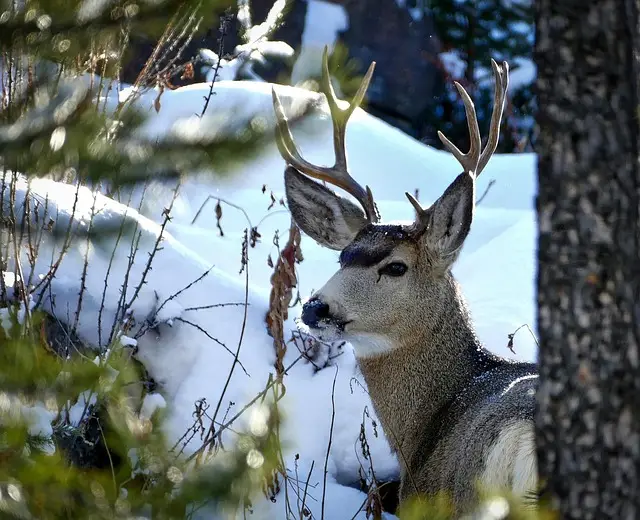
Characteristics of Mule Deer Sound - Distinctive Calls & Wild Deer Vocalizations
Habitat
Western North America - mountains, foothills, deserts, and shrublands
Diet
Herbivore - shrubs, forbs, grasses, and seasonal vegetation
Lifespan
9-11 years in the wild, up to 20 years in captivity
Weight
43-90 kg (females), 68-150 kg (males)
Length
1.2-2.1 meters body length, 80-106 cm shoulder height
Region
Western North America from Alaska to Mexico
Mule Deer Sound Characteristics
The mule deer sound is among the most subtle yet distinctive vocalizations in North American wildlife. From the explosive alarm snort mule deer sound to the gentle maternal bleats, these graceful ungulates use various mule deer sounds to communicate danger, maintain social bonds, and coordinate group movements. Each mule deer sound serves a specific purpose in their survival strategy, making the mule deer sound repertoire essential for understanding their behavior in western habitats.
Alarm Snort
The most recognizable mule deer sound is the explosive alarm snort, a forceful exhalation through the nostrils that signals danger to nearby deer. This warning mule deer sound is produced when a deer detects a potential predator or unfamiliar threat. The alarm snort mule deer sound is often accompanied by foot-stomping and a raised tail, creating a multi-sensory warning system. This critical mule deer sound can trigger immediate flight responses in other deer within hearing range, making it essential for herd survival.
200-800 Hz
70-85 decibels
0.2-0.5 seconds, often repeated
When detecting predators, unfamiliar humans, or potential threats
Maternal Bleat
The maternal bleat mule deer sound is a soft, gentle vocalization used by does to communicate with their fawns. This nurturing mule deer sound helps maintain contact between mother and offspring, especially in dense vegetation or during feeding. The maternal bleat mule deer sound has a distinctive tone that fawns can recognize from birth, ensuring they respond only to their own mother. This intimate mule deer sound is crucial for fawn survival during the vulnerable early months of life.
300-1000 Hz
55-70 decibels
0.5-2 seconds
When calling fawns, during nursing, or maintaining contact with offspring
Fawn Distress Call
The fawn distress call is a high-pitched, urgent mule deer sound produced by young deer when separated from their mother or experiencing danger. This plaintive mule deer sound triggers immediate protective responses from does and can alert nearby adults to potential threats. The distress call mule deer sound is one of the most emotionally charged vocalizations in the species, designed to elicit rapid maternal response. This critical mule deer sound ensures fawn survival during their most vulnerable period.
800-2000 Hz
65-80 decibels
1-3 seconds, often repeated
When separated from mother, feeling threatened, or experiencing distress
Rutting Grunt
The rutting grunt is a low, guttural mule deer sound produced by bucks during the breeding season. This masculine mule deer sound serves to attract does and challenge rival bucks for breeding rights. The rutting grunt mule deer sound becomes more frequent and intense as the rut progresses, reflecting the buck's hormonal state and dominance. This aggressive mule deer sound is often accompanied by physical displays such as antler thrashing and scraping, creating a complete breeding advertisement.
100-400 Hz
60-75 decibels
0.5-1.5 seconds
During breeding season, when pursuing does, or challenging rival bucks
Contact Call
The contact call is a soft, brief mule deer sound used to maintain awareness of herd members' locations. This social mule deer sound helps deer stay connected while foraging or moving through terrain with limited visibility. The contact call mule deer sound is subtle enough not to attract predator attention but distinct enough for herd members to recognize. This important mule deer sound facilitates group cohesion and coordinated movement in mule deer social structures.
250-700 Hz
50-65 decibels
0.3-0.8 seconds
While foraging in groups, moving through dense cover, or maintaining herd cohesion
Aggressive Snort-Wheeze
The aggressive snort-wheeze is a threatening mule deer sound produced during confrontations between bucks or when does defend fawns. This intimidating mule deer sound combines a forceful snort with a wheezing exhalation, creating a distinctive warning. The snort-wheeze mule deer sound often precedes physical confrontation and serves as a final warning before aggressive action. This powerful mule deer sound demonstrates the deer's willingness to fight and often resolves conflicts without physical contact.
150-600 Hz
65-80 decibels
0.5-1 second
During territorial disputes, protecting fawns, or establishing dominance
Nursing Vocalization
The nursing vocalization is a very soft, intimate mule deer sound exchanged between does and nursing fawns. This gentle mule deer sound reinforces the mother-offspring bond and helps regulate nursing behavior. The nursing mule deer sound is barely audible beyond a few feet, reflecting the private nature of this interaction. This tender mule deer sound plays an important role in fawn development and maternal bonding during the critical early weeks of life.
400-1200 Hz
45-60 decibels
0.5-2 seconds
During nursing sessions, bonding moments, or close maternal care
Curiosity Sniff
The curiosity sniff is a gentle, investigative mule deer sound produced when deer encounter novel objects or scents. This inquisitive mule deer sound combines soft nasal exhalations with subtle vocalizations as deer assess their environment. The curiosity sniff mule deer sound indicates the deer is alert but not alarmed, gathering information about potential food sources or changes in their habitat. This exploratory mule deer sound demonstrates the species' cautious yet curious nature when investigating their surroundings.
200-500 Hz
40-55 decibels
0.2-0.5 seconds, repeated
When investigating new objects, scents, or changes in the environment
Interesting Mule Deer Sound - Distinctive Calls & Wild Deer Vocalizations Sound Facts
The mule deer sound repertoire is more subtle than elk or moose, reflecting their reliance on visual signals and scent
Hunters can identify mule deer sound patterns to determine deer age, sex, and emotional state
The alarm snort mule deer sound has been recorded triggering flight responses in deer over 100 yards away
Fawns can recognize their mother's unique mule deer sound within 24 hours of birth
The mule deer sound during rut increases by over 300% compared to non-breeding seasons
Interesting Facts about Mule Deer Sound - Distinctive Calls & Wild Deer Vocalizations Sound
The mule deer sound includes over 8 distinct vocalizations for different communication purposes
The alarm snort mule deer sound can alert other deer up to 100 yards away
Fawns produce a unique high-pitched mule deer sound that only their mothers can recognize
The mule deer sound during rutting season becomes more frequent and aggressive in bucks
Mule deer sounds are generally quieter than elk or moose vocalizations, reflecting their cautious nature
The bleating mule deer sound of does is used to locate separated fawns in dense vegetation
Mule deer produce a distinctive foot-stomping sound combined with snorts when alarmed
The grunting mule deer sound of bucks during rut can be heard up to 50 yards away
FAQs about Mule Deer Sound - Distinctive Calls & Wild Deer Vocalizations Sound
Find answers to all your questions about Mule Deer Sound - Distinctive Calls & Wild Deer Vocalizations sounds
Q What does a mule deer sound like?
A mule deer sound is generally subtle and less vocal compared to other deer species like elk or whitetail deer. The most common mule deer sound is the alarm snort, a forceful exhalation through the nostrils that sounds like a sharp 'whoosh' or 'pfft' when the deer detects danger. Does produce a soft bleating mule deer sound to communicate with fawns, similar to a gentle 'meh' or 'maa' sound. During the rut, bucks make a low grunting mule deer sound that resembles a quiet 'urgh' or 'ugh' vocalization. Fawns produce a high-pitched, plaintive mule deer sound when distressed. Overall, mule deer sounds are quieter and less frequent than many other ungulates, as they rely more heavily on body language and scent communication.
Q Why do mule deer make snorting sounds?
Mule deer make snorting sounds primarily as an alarm signal to warn other deer of potential danger. The snorting mule deer sound is produced by forcefully exhaling air through the nostrils, creating a loud, explosive noise that can be heard by other deer up to 100 yards away. This alarm mule deer sound serves multiple purposes: it alerts nearby herd members to flee, it may startle or confuse predators, and it signals to the predator that it has been detected, potentially causing it to abandon the hunt. The snorting mule deer sound is often accompanied by foot-stomping and a raised tail with white rump patch displayed, creating a multi-sensory warning system. Deer may also produce a snorting mule deer sound when investigating unfamiliar objects or scents, though these snorts are typically softer and less urgent than true alarm snorts.
Q Do mule deer make sounds during mating season?
Yes, mule deer make more frequent sounds during mating season, though they remain relatively quiet compared to elk or moose. The primary mule deer sound during rut is the buck's grunting vocalization, a low, guttural sound used to attract does and challenge rival bucks. This rutting mule deer sound becomes more frequent as the breeding season progresses, typically occurring from late October through December. Bucks may also produce aggressive snort-wheeze sounds during confrontations with other males. Does in estrus occasionally produce soft bleating mule deer sounds that may attract bucks. The overall mule deer sound activity increases by several hundred percent during the rut compared to other times of year, though it's still much quieter than the bugling of elk or the roaring of moose during their respective breeding seasons.
Q How do mule deer fawns communicate with their mothers?
Mule deer fawns communicate with their mothers primarily through a distinctive high-pitched bleating mule deer sound. This fawn vocalization is unique to each individual, allowing does to recognize their own offspring among other fawns. The fawn mule deer sound is most commonly heard when the young deer is hungry, seeking comfort, or has become separated from its mother. Does respond with their own maternal bleating mule deer sound, which helps fawns locate their mothers in dense vegetation or across distances. The nursing mule deer sound is a very soft, intimate vocalization exchanged during feeding sessions that reinforces the mother-offspring bond. If a fawn is in distress or danger, it produces a more urgent, louder mule deer sound that triggers immediate protective responses from the doe. This vocal communication is crucial during the first few months of life when fawns are most vulnerable.
Q Can you use mule deer sounds for hunting?
Yes, mule deer sounds can be used for hunting, though they are less commonly employed than elk or whitetail deer calls. Hunters use various mule deer sound calls to attract deer or trigger responses. The most effective mule deer sound for hunting is the doe bleat, which can attract bucks during the rut or bring in does and fawns during other seasons. Fawn distress calls producing a high-pitched mule deer sound can attract does with maternal instincts. During the rut, buck grunts can challenge territorial males or attract curious deer. However, mule deer are generally more visual than vocal animals, so calling is less effective than with other species. The mule deer sound must be used sparingly and realistically, as overcalling can alert deer to danger. Many successful mule deer hunters rely more on spot-and-stalk tactics than calling, using mule deer sounds only as a supplementary technique in specific situations.
Q What is the difference between mule deer and whitetail deer sounds?
While mule deer sounds and whitetail deer sounds share some similarities, there are notable differences in their vocalizations. The alarm snort mule deer sound is generally shorter and more explosive than the whitetail's snort, which often includes a longer, drawn-out wheeze. Whitetail deer are typically more vocal overall, producing sounds more frequently than mule deer. The bleating mule deer sound of does is softer and less frequent than whitetail doe bleats. During the rut, whitetail bucks produce more aggressive and varied grunting sounds compared to the quieter rutting mule deer sound. Whitetails also produce a distinctive 'snort-wheeze' during aggressive encounters that is more pronounced than the mule deer version. The fawn distress mule deer sound is similar to whitetail fawn calls but may be slightly lower in pitch. Overall, mule deer rely less on vocal communication and more on visual signals and body language compared to their whitetail cousins, making mule deer sounds generally quieter and less frequent.
Q When are mule deer most vocal?
Mule deer are most vocal during specific times and situations throughout the year. The breeding season (rut) from late October through December sees the greatest increase in mule deer sound production, with bucks grunting more frequently and does bleating to communicate with potential mates. Spring and early summer bring increased mule deer sounds as does communicate with newborn fawns through maternal bleats and nursing vocalizations. Dawn and dusk feeding periods may produce more contact call mule deer sounds as herds coordinate movement and maintain awareness of each other's locations. Alarm situations trigger immediate vocal responses, with the snorting mule deer sound occurring whenever deer detect potential threats regardless of time of day or season. However, compared to many other deer species, mule deer remain relatively quiet throughout the year, relying more heavily on body language, scent marking, and visual signals for communication rather than frequent vocalizations.
Q How far can mule deer sounds travel?
The distance that mule deer sounds can travel varies significantly depending on the type of vocalization and environmental conditions. The alarm snort mule deer sound, being the loudest vocalization, can be heard by other deer up to 100 yards away in open terrain with favorable wind conditions. In dense forests or adverse weather, this distance may be reduced to 50 yards or less. The rutting grunt mule deer sound produced by bucks typically carries 30-50 yards in optimal conditions. Softer mule deer sounds like maternal bleats and contact calls are designed for close-range communication, typically effective within 20-30 yards. The high-pitched fawn distress mule deer sound can travel 40-60 yards due to its frequency and urgency. Environmental factors like wind direction, terrain, vegetation density, and ambient noise significantly affect how far mule deer sounds travel. In general, mule deer sounds are designed for relatively short-range communication compared to the long-distance vocalizations of elk or wolves, reflecting the species' reliance on visual and scent-based communication.
Most Downloaded mammals Animal Sounds
Discover our most popular mammals animal sounds