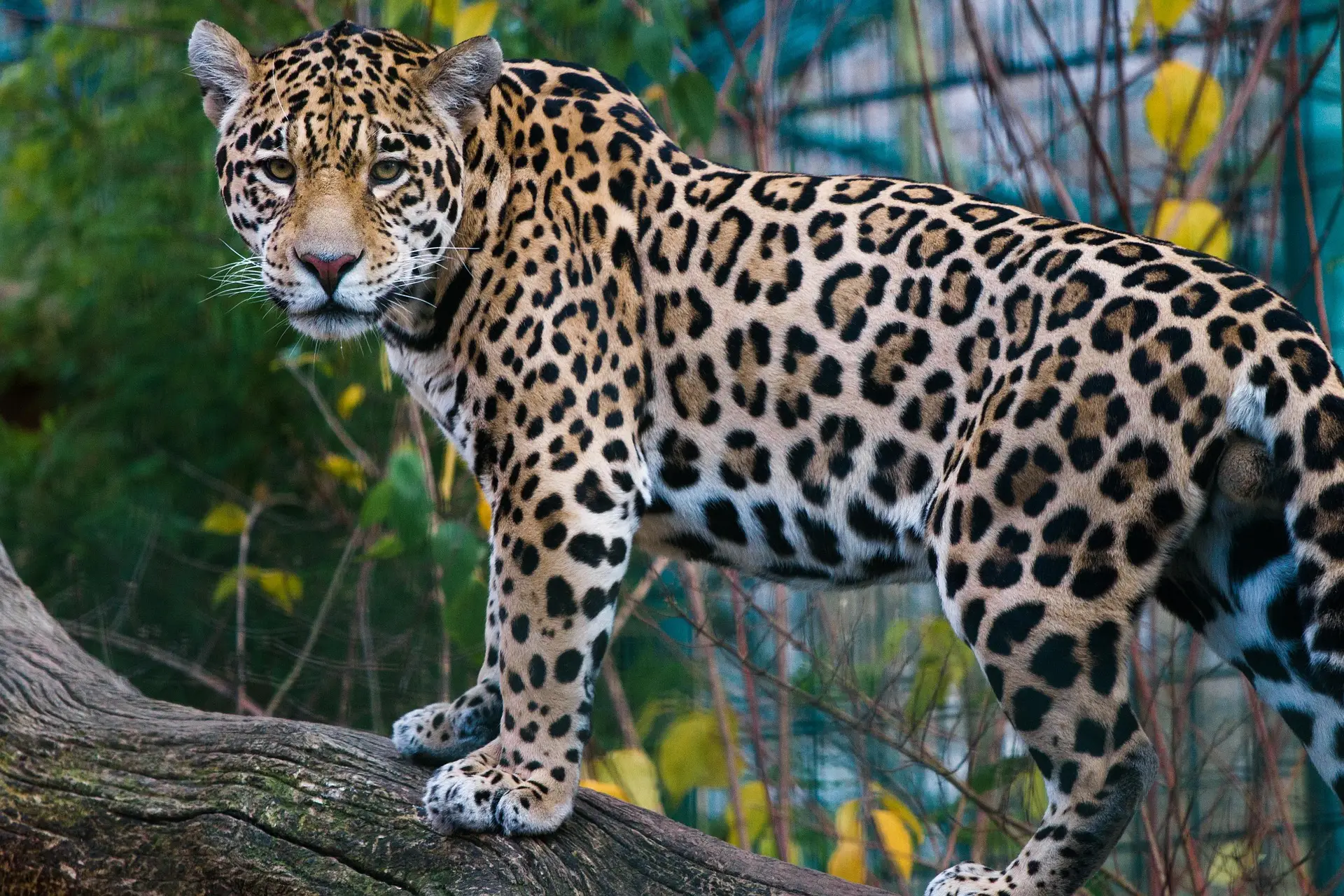
Characteristics of Jaguar Sound - Powerful Roars & Big Cat Vocalizations
Habitat
Rainforests, wetlands, grasslands, and scrublands near water sources
Diet
Carnivore - deer, peccaries, capybaras, caimans, fish, and over 85 prey species
Lifespan
12-15 years in the wild, up to 23 years in captivity
Weight
56-96 kg (males larger than females)
Length
1.1-1.85 meters body length, 45-75 cm tail
Region
Central and South America, from Mexico to Argentina
Jaguar Sound Characteristics
The jaguar sound is among the most powerful and distinctive vocalizations in the big cat family. From the deep, resonant roaring jaguar sound that announces territory to the unique grunting jaguar sound used for friendly communication, these apex predators possess a sophisticated vocal repertoire. Each jaguar sound serves specific purposes in their solitary lifestyle—establishing territories, attracting mates, warning rivals, and communicating with offspring. The jaguar sound differs from other big cats due to their unique vocal anatomy and behavioral adaptations to rainforest environments. Understanding jaguar sounds provides insight into the behavior and ecology of these elusive and powerful predators.
Territorial Roar
The territorial roar is the most powerful jaguar sound, produced primarily by males to announce territory ownership and warn rival jaguars. This impressive jaguar sound is a series of deep, resonant roars that can be heard up to 5 miles away in dense jungle conditions. The roaring jaguar sound typically consists of 5-15 individual roars delivered in succession, with each roar lasting 1-2 seconds. This jaguar sound is most frequently heard during breeding season when males are advertising for mates and defending territories. The territorial roar jaguar sound is deeper and more guttural than lion or tiger roars, reflecting the jaguar's robust build and powerful vocal apparatus. This dominant jaguar sound serves to minimize physical confrontations by establishing acoustic territories that rivals respect.
80-300 Hz
100-114 decibels
5-15 roars over 30-60 seconds
During breeding season, territorial disputes, and when advertising presence to potential mates
Grunting Call
The grunting call is a unique jaguar sound used for friendly communication between individuals, particularly between mothers and cubs or during courtship. This distinctive jaguar sound consists of repeated grunts that sound like "uh-uh-uh" delivered in a rhythmic pattern. The grunting jaguar sound is softer and less aggressive than roars, conveying non-threatening intentions. This jaguar sound is particularly important for mother-cub communication, helping maintain contact in dense vegetation where visual contact is limited. During courtship, both males and females produce grunting jaguar sounds as part of their mating ritual. This friendly jaguar sound demonstrates that despite their fearsome reputation, jaguars have gentle vocalizations for social bonding.
150-500 Hz
70-85 decibels
0.5-1 second per grunt, repeated 3-10 times
During mother-cub interactions, courtship, and friendly encounters between jaguars
Aggressive Growl
The aggressive growl is a threatening jaguar sound produced during confrontations, when defending kills, or when feeling threatened. This menacing jaguar sound is a continuous, low-frequency rumble that conveys danger and readiness to attack. The growling jaguar sound escalates in intensity as aggression increases, potentially transitioning into roars or physical attacks if the threat persists. This jaguar sound is often accompanied by visual displays including bared teeth, flattened ears, and tense body posture. The aggressive growl jaguar sound serves as a final warning before physical confrontation, allowing potential conflicts to be resolved without fighting. This defensive jaguar sound is crucial for protecting food resources and personal space.
100-400 Hz
85-100 decibels
2-10 seconds of continuous growling
During confrontations, when defending kills, feeling threatened, or warning intruders
Sawing Call
The sawing call is a distinctive jaguar sound that resembles the back-and-forth motion of sawing wood. This unique jaguar sound consists of repeated rasping vocalizations that sound like "waugh-waugh-waugh" delivered in a rhythmic pattern. The sawing call jaguar sound is used for long-distance communication and may serve to announce presence without the aggressive implications of roaring. This jaguar sound is particularly common during the breeding season and may help jaguars locate potential mates across large territories. The sawing call jaguar sound is less frequently heard than roars but is distinctive enough to be easily recognized. This specialized jaguar sound demonstrates the vocal versatility of these big cats.
200-600 Hz
80-95 decibels
1-2 seconds per saw, repeated 5-15 times
During breeding season, long-distance communication, and territorial announcements
Cub Mew
The cub mew is a high-pitched jaguar sound produced by young jaguars when communicating with their mother. This plaintive jaguar sound consists of soft mewing and chirping vocalizations that trigger maternal responses. The cub mew jaguar sound increases in intensity when cubs are hungry, cold, or separated from their mother. As cubs grow, their mewing jaguar sounds gradually deepen and develop into adult vocalizations. The cub mew jaguar sound is crucial for survival during the vulnerable early months when cubs are completely dependent on maternal care. Mother jaguars respond specifically to their own cubs' jaguar sounds, demonstrating individual recognition within the vocal repertoire.
500-2000 Hz
60-75 decibels
0.3-1 second, repeated as needed
By cubs when hungry, cold, separated from mother, or seeking attention
Mating Call
The mating call is a specialized jaguar sound produced during courtship and breeding activities. This intimate jaguar sound combines elements of grunting, purring, and soft roaring delivered in specific patterns. The mating call jaguar sound is exchanged between males and females during courtship encounters and helps coordinate breeding activities. This jaguar sound is softer and more melodious than territorial roars, reflecting the temporary social nature of mating interactions. The mating call jaguar sound may continue intermittently during the several days that pairs spend together during breeding. This reproductive jaguar sound is essential for successful mating in these normally solitary cats.
150-600 Hz
70-90 decibels
2-5 seconds, repeated during courtship
During courtship encounters, mating activities, and pair bonding periods
Alarm Snarl
The alarm snarl is a sudden, explosive jaguar sound produced when startled or when detecting immediate danger. This urgent jaguar sound is a sharp, hissing snarl that conveys surprise and readiness for defensive action. The alarm snarl jaguar sound is typically brief but intense, designed to startle potential threats and provide a moment for the jaguar to assess the situation. This jaguar sound may be followed by aggressive growls or rapid retreat depending on the nature of the threat. The alarm snarl jaguar sound is one of the quickest vocalizations these cats produce, reflecting the need for immediate response to danger. This defensive jaguar sound demonstrates the cats' constant vigilance in their environment.
300-1000 Hz
85-100 decibels
0.3-1 second
When startled, detecting immediate danger, or responding to sudden threats
Contentment Purr
The contentment purr is a soft, rumbling jaguar sound produced when the cat is relaxed and comfortable. This gentle jaguar sound is similar to domestic cat purring but much deeper and more powerful due to the jaguar's size. The purring jaguar sound is most commonly heard when jaguars are resting after feeding, during grooming, or in comfortable social situations. Mother jaguars produce purring jaguar sounds when nursing cubs, providing comfort and reassurance. This soothing jaguar sound demonstrates the capacity for contentment and relaxation in these powerful predators. The contentment purr jaguar sound is rarely heard in the wild but is more common in captive jaguars comfortable with their environment.
20-50 Hz (infrasonic components)
50-70 decibels
Continuous for several minutes
When relaxed, after feeding, during grooming, or in comfortable situations
Hunting Grunt
The hunting grunt is a specialized jaguar sound produced during stalking and hunting activities. This focused jaguar sound consists of low, quiet grunts that help the cat maintain concentration during the hunt. Unlike most big cats that remain completely silent while hunting, jaguars occasionally produce these soft hunting jaguar sounds, possibly to coordinate movements or express anticipation. The hunting grunt jaguar sound is barely audible beyond a few meters and doesn't alert prey to the predator's presence. This unique jaguar sound reflects their confidence as apex predators and their adaptation to hunting in dense vegetation where sound travels differently than in open habitats. The hunting grunt jaguar sound is one of the most difficult vocalizations to observe in wild jaguars.
100-300 Hz
40-60 decibels
0.2-0.5 seconds, intermittent
During stalking, hunting activities, and prey pursuit in dense vegetation
Interesting Jaguar Sound - Powerful Roars & Big Cat Vocalizations Sound Facts
The jaguar sound roar is deeper than a lion's roar due to their more robust build and vocal anatomy
Jaguars can produce infrasonic jaguar sounds below human hearing range for long-distance communication
The grunting jaguar sound is unique among big cats and not found in lions, tigers, or leopards
Female jaguars can recognize their cubs' individual jaguar sound signatures even in darkness
The jaguar sound repertoire changes with age, with cubs taking two years to develop full adult vocalizations
Interesting Facts about Jaguar Sound - Powerful Roars & Big Cat Vocalizations Sound
The jaguar sound roar can be heard up to 5 miles away in dense rainforest conditions
Jaguars produce over 10 different types of jaguar sounds for various communication purposes
The grunting jaguar sound is unique among big cats and used for friendly communication
Male jaguars use their jaguar sound roars to advertise territory and attract females
The jaguar sound repertoire includes roars, grunts, growls, and a distinctive sawing call
Baby jaguars develop their adult jaguar sound gradually over their first two years
The jaguar sound differs from other big cats due to their unique vocal anatomy
Jaguars can produce jaguar sounds while hunting, unlike most other big cats that remain silent
FAQs about Jaguar Sound - Powerful Roars & Big Cat Vocalizations Sound
Find answers to all your questions about Jaguar Sound - Powerful Roars & Big Cat Vocalizations sounds
Q What does a jaguar sound like?
A jaguar sound is characterized by deep, powerful vocalizations that reflect their status as the Americas' largest big cat. The most impressive jaguar sound is the territorial roar—a series of 5-15 deep, resonant roars that can be heard up to 5 miles away in jungle conditions. This roaring jaguar sound is deeper and more guttural than lion or tiger roars. Jaguars also produce a unique grunting jaguar sound—repeated "uh-uh-uh" vocalizations used for friendly communication between mothers and cubs or during courtship. The aggressive growl jaguar sound is a continuous, menacing rumble produced during confrontations. The sawing call jaguar sound resembles wood-sawing and is used for long-distance communication. Cubs produce high-pitched mewing jaguar sounds when communicating with their mothers. The specific jaguar sound you hear depends on the context—territorial roars are most common during breeding season, while grunting sounds indicate friendly interactions.
Q How does a jaguar roar compare to other big cats?
The jaguar sound roar is distinctly different from other big cats due to their unique anatomy and vocal adaptations. The roaring jaguar sound is deeper and more guttural than lion roars, reflecting the jaguar's more robust, compact build and powerful jaw structure. While lion roars are longer and more drawn out, the jaguar sound roar consists of shorter, more forceful bursts delivered in rapid succession. Compared to tiger roars, the jaguar sound is lower in frequency and has a more resonant quality. The jaguar sound roar is also less frequent than lion vocalizations—jaguars are more solitary and vocalize primarily during breeding season rather than for constant pride communication. The power of the jaguar sound roar is impressive considering jaguars are smaller than lions and tigers, demonstrating their exceptionally strong vocal apparatus. The unique grunting jaguar sound is not found in other big cats, making it a distinctive identifier of jaguar vocalizations.
Q Why do jaguars grunt?
Jaguars produce grunting jaguar sounds for friendly, non-aggressive communication, making this vocalization unique among big cats. The grunting jaguar sound—repeated "uh-uh-uh" vocalizations—serves multiple important social functions. Mother jaguars use grunting jaguar sounds to communicate with their cubs, maintaining contact in dense rainforest vegetation where visual communication is difficult. The grunting jaguar sound helps cubs locate their mother and signals safety and reassurance. During courtship, both male and female jaguars produce grunting jaguar sounds as part of their mating ritual, indicating non-threatening intentions and facilitating pair bonding. The grunting jaguar sound may also be used during rare friendly encounters between adult jaguars, though these cats are primarily solitary. This gentle jaguar sound contrasts sharply with aggressive roars and growls, demonstrating the vocal versatility jaguars use to navigate their complex social interactions. The unique grunting jaguar sound is one of the features that distinguishes jaguar vocalizations from other big cats.
Q Can jaguars purr like domestic cats?
Yes, jaguars can produce a purring jaguar sound similar to domestic cats but much deeper and more powerful due to their size. The contentment purr jaguar sound is a low-frequency rumbling vocalization produced when jaguars are relaxed, comfortable, and content. This soothing jaguar sound is most commonly heard when cats are resting after feeding, during grooming sessions, or in comfortable social situations. Mother jaguars produce purring jaguar sounds when nursing cubs, providing comfort and reassurance to their offspring. The purring jaguar sound includes infrasonic components below 50 Hz that can be felt as vibrations more than heard. Unlike domestic cat purrs that occur during both inhalation and exhalation, the jaguar sound purr may have different characteristics due to their larger vocal apparatus. This gentle jaguar sound is rarely heard in wild jaguars due to their solitary, cautious nature, but is more commonly observed in captive jaguars that are comfortable with their environment and caretakers. The ability to purr demonstrates that despite their fearsome reputation, jaguars have capacity for contentment and gentle vocalizations.
Q When are jaguars most vocal?
Jaguars are most vocal during breeding season when communication needs increase for mate attraction and territory establishment. The frequency of jaguar sounds peaks during this period, with males producing territorial roaring jaguar sounds to advertise their presence to females and warn rival males. The roaring jaguar sound is most common at dawn and dusk when jaguars are most active. During courtship, both males and females produce various jaguar sounds including grunts, mating calls, and soft roars as they coordinate breeding activities. Mother jaguars with cubs produce more frequent jaguar sounds for maternal communication, including grunting calls and responses to cub mews. Outside breeding season, jaguars are generally quieter, as their solitary lifestyle requires less vocal communication than social big cats like lions. Territorial disputes can trigger intense jaguar sound exchanges including roars and aggressive growls. Jaguars may also vocalize when defending kills from scavengers or when encountering unexpected threats. Overall, jaguar sounds are less frequent than lion vocalizations but more varied in type and context.
Q How do baby jaguars learn their vocalizations?
Baby jaguars develop their jaguar sounds through a combination of innate programming and learning from their mother over approximately two years. Cubs begin producing simple mewing jaguar sounds instinctively from birth, triggering maternal care responses. As they grow, young jaguars listen to their mother's jaguar sounds and gradually expand their vocal repertoire through imitation and practice. The learning process for jaguar sounds is gradual—cubs' mews slowly deepen into grunts, and eventually develop into adult roars and growls. Mother jaguars actively teach their cubs by producing specific jaguar sounds in different contexts, helping cubs learn when to use various vocalizations. Play behavior among siblings provides opportunities to practice different jaguar sounds in safe contexts. By six months, young jaguars can produce most jaguar sound types, though their vocalizations lack the power and resonance of adults. Full adult jaguar sounds don't develop until jaguars reach sexual maturity around 2-3 years old when their vocal apparatus is fully developed. The quality and variety of jaguar sounds a cub learns depends heavily on the time spent with their mother before independence.
Q Can jaguars recognize individual cats by their sounds?
Yes, jaguars can recognize individual cats by their unique jaguar sound signatures, particularly important for mother-cub recognition and territorial neighbor identification. Each jaguar produces slightly different jaguar sounds with subtle variations in pitch, tone, rhythm, and quality that serve as vocal fingerprints. Mother jaguars can identify their specific cubs' mewing jaguar sounds even in complete darkness or dense vegetation, ensuring they respond to their own offspring rather than unrelated cubs. This individual recognition through jaguar sounds is crucial for maternal care and cub survival. Adult jaguars also recognize the territorial roaring jaguar sounds of neighboring individuals, responding differently to familiar neighbors versus unknown intruders—a phenomenon called the "dear enemy" effect. Familiar neighbor jaguar sounds trigger less aggressive responses than stranger vocalizations, helping reduce unnecessary conflicts. During breeding season, female jaguars may assess male quality through their roaring jaguar sounds, potentially using vocal characteristics to evaluate potential mates. This ability to recognize individual jaguar sounds demonstrates sophisticated auditory processing and the importance of vocal communication even in these solitary cats.
Q Do jaguars make sounds while hunting?
Unlike most big cats that remain completely silent while hunting, jaguars occasionally produce quiet hunting grunt jaguar sounds during stalking and prey pursuit. These specialized jaguar sounds consist of low, barely audible grunts that help the cat maintain focus during the hunt without alerting prey. The hunting grunt jaguar sound is unique to jaguars and reflects their confidence as apex predators in rainforest environments. This vocalization is so quiet it's rarely detected beyond a few meters and doesn't compromise hunting success. Jaguars may produce these hunting jaguar sounds to coordinate movements when navigating dense vegetation or to express anticipation during the final approach to prey. However, most jaguar hunting is conducted in silence, with vocalizations reserved for after the kill. Jaguars may produce aggressive growling jaguar sounds when defending fresh kills from scavengers or competitors. The ability to occasionally vocalize while hunting without compromising success demonstrates the jaguar's dominance in their ecosystem and their adaptation to hunting in acoustically complex rainforest environments where sound travels differently than in open habitats.
Most Downloaded mammals Animal Sounds
Discover our most popular mammals animal sounds