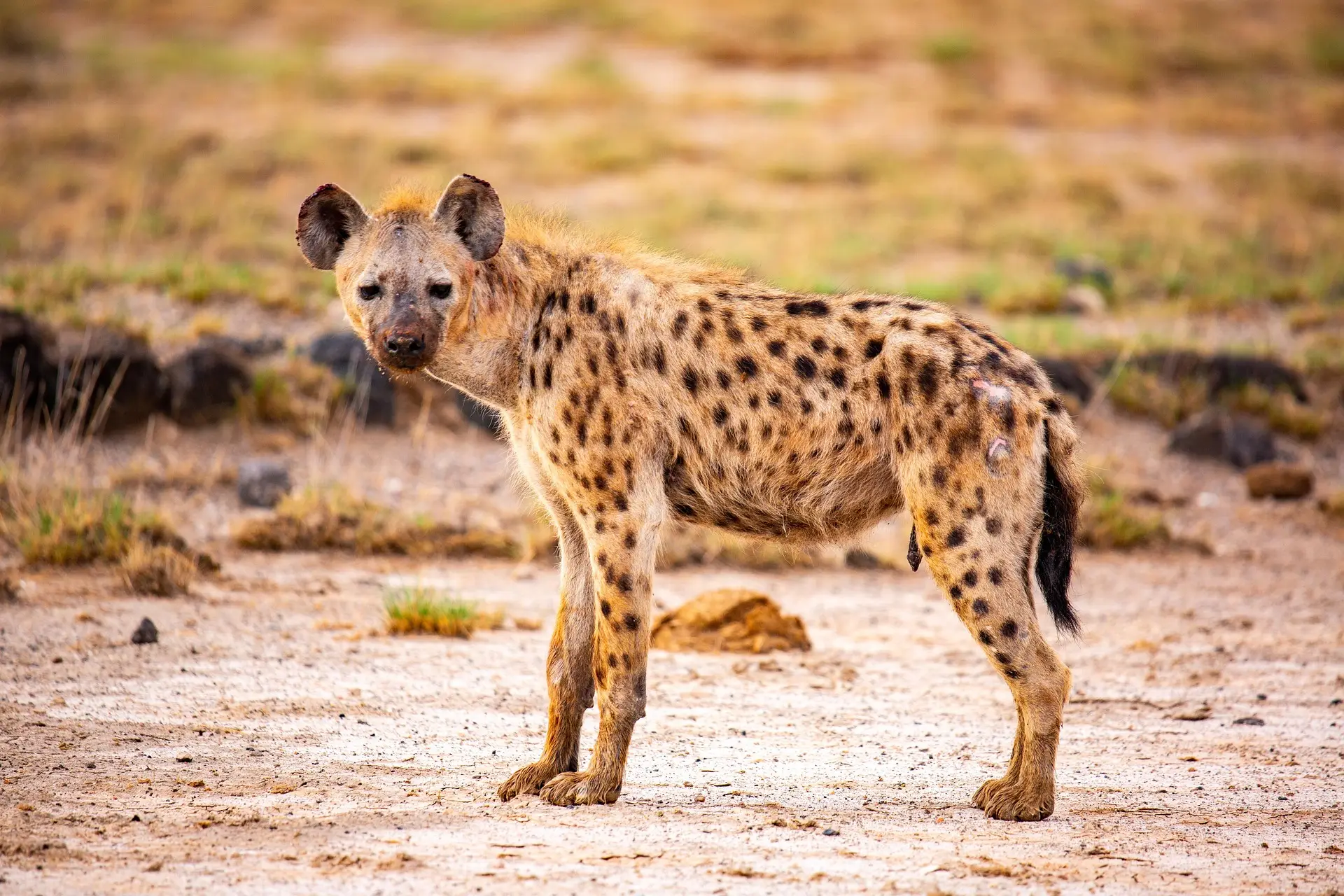
Hyena Sound - Distinctive Laughing Calls & Vocalizations Sound
Experience the unique hyena sound, from the iconic laughing call to aggressive whoops and growls. These powerful hyena sounds showcase the complex vocal communication of Africa's most misunderstood predators.
Characteristics of Hyena Sound - Distinctive Laughing Calls & Vocalizations
Habitat
Savannas, grasslands, woodlands, and semi-desert regions of Africa
Diet
Carnivore - large mammals, carrion, and scavenged remains
Lifespan
12-15 years in the wild, up to 25 years in captivity
Weight
40-86 kg (females larger than males)
Length
95-165 cm body length, plus 25-36 cm tail
Region
Sub-Saharan Africa, with spotted hyenas being the most widespread
Hyena Sound Characteristics
The hyena sound is among the most distinctive and recognizable animal vocalizations in the African savanna. From the famous laughing hyena sound to powerful whoops and growls, these carnivores use various hyena sounds to communicate complex social information. Each hyena sound serves a specific purpose in their sophisticated clan structure, making the hyena sound repertoire one of the most diverse among carnivorous mammals.
Laughing Call
The most famous hyena sound is the giggling or laughing call, which is actually a sign of nervousness, excitement, or submission rather than amusement. This distinctive hyena sound consists of a series of high-pitched giggles that can vary in intensity. The laughing hyena sound is most commonly heard during feeding frenzies or when a hyena is being chased by a dominant clan member. This iconic hyena sound has made spotted hyenas one of the most recognizable animals in Africa.
400-1000 Hz
85-100 decibels
2-8 seconds
During feeding competition, when being chased, or in stressful social situations
Whooping Call
The whooping hyena sound is a long-distance communication call that can travel up to 3 miles across the savanna. This powerful hyena sound starts low and rises to a high pitch, often repeated several times. The whooping hyena sound is used to locate clan members, announce a kill, or rally the clan for territorial defense. This loud hyena sound is one of the most important vocalizations for maintaining clan cohesion and can convey information about the caller's identity and location.
220-800 Hz
100-112 decibels
3-5 seconds per whoop
To locate clan members, announce food sources, or during territorial disputes
Growl
The growling hyena sound is a low, threatening vocalization used during aggressive encounters or to warn others away from food. This menacing hyena sound can vary from a soft rumble to a loud, aggressive snarl. The growling hyena sound is often accompanied by bared teeth and raised hackles, serving as a clear warning signal. This aggressive hyena sound is crucial for establishing dominance hierarchies within the clan and defending resources.
80-300 Hz
75-95 decibels
1-4 seconds
During feeding disputes, territorial conflicts, or when threatened
Groan
The groaning hyena sound is a soft, low-frequency vocalization used for close-range communication between clan members. This gentle hyena sound is often heard during social bonding activities, greeting ceremonies, or when mothers communicate with their cubs. The groaning hyena sound helps maintain peaceful social relationships within the clan and is quite different from the more aggressive hyena sounds. This intimate hyena sound demonstrates the complex social nature of hyena communication.
100-400 Hz
60-75 decibels
1-3 seconds
During greeting rituals, social bonding, or maternal communication with cubs
Yell
The yelling hyena sound is a high-pitched, urgent vocalization that signals alarm or extreme excitement. This sharp hyena sound is often produced when a hyena discovers a large food source or when the clan is under threat from lions or other predators. The yelling hyena sound can trigger immediate responses from other clan members, causing them to rush to the location. This alert hyena sound is essential for clan survival and coordinated group responses.
500-1200 Hz
90-105 decibels
1-2 seconds
When discovering food, during predator encounters, or in emergency situations
Rumble
The rumbling hyena sound is a deep, continuous vocalization that expresses contentment or serves as a contact call between closely bonded individuals. This soothing hyena sound is often heard when hyenas are resting together at the den or during peaceful social interactions. The rumbling hyena sound helps strengthen social bonds within the clan and is particularly common between mothers and their offspring. This calming hyena sound showcases the gentler side of hyena communication.
60-250 Hz
55-70 decibels
2-6 seconds
During rest periods, social bonding, or peaceful clan gatherings
Cub Whine
The whining hyena sound produced by cubs is a high-pitched, plaintive vocalization used to solicit attention, food, or comfort from their mother. This juvenile hyena sound is distinctly different from adult vocalizations and becomes less frequent as cubs mature. The cub whining hyena sound is crucial for survival, ensuring that mothers respond to their offspring's needs. As cubs grow, this hyena sound gradually transitions into more adult-like vocalizations.
600-1400 Hz
65-80 decibels
1-4 seconds
When cubs are hungry, seeking attention, or feeling distressed
Interesting Hyena Sound - Distinctive Laughing Calls & Vocalizations Sound Facts
The hyena sound known as laughing is unique to spotted hyenas and cannot be produced by other hyena species
Scientists can identify individual hyenas by analyzing the acoustic properties of their hyena sound signatures
The whooping hyena sound can be heard by other clan members from over 3 miles away in optimal conditions
Female hyenas produce lower-pitched hyena sounds than males despite being the same size or larger
Hyena sounds are so complex that researchers have identified over 11 distinct vocalization types in spotted hyenas
Interesting Facts about Hyena Sound - Distinctive Laughing Calls & Vocalizations Sound
The hyena sound known as 'laughing' can be heard up to 3 miles away and signals excitement or submission
Hyenas produce over 11 different types of hyena sounds for communication within their clan
The whooping hyena sound can reach volumes of 112 decibels, louder than a rock concert
Female hyenas produce deeper hyena sounds than males due to higher testosterone levels
Hyena sounds vary by species, with spotted hyenas having the most complex vocal repertoire
Cubs learn to recognize their mother's unique hyena sound within the first few days of life
The giggling hyena sound is actually a sign of stress or fear, not amusement
Hyena sounds can convey information about age, social status, and individual identity
FAQs about Hyena Sound - Distinctive Laughing Calls & Vocalizations Sound
Find answers to all your questions about Hyena Sound - Distinctive Laughing Calls & Vocalizations sounds
Q What does a hyena sound like?
A hyena sound is highly distinctive and varies depending on the context. The most famous hyena sound is the 'laughing' or giggling call, which consists of high-pitched, rapid vocalizations that sound like manic laughter. However, the hyena sound repertoire is much more diverse, including powerful whooping calls that can travel miles, deep growls during aggressive encounters, soft groans for social bonding, and sharp yells for alarm situations. Each hyena sound serves a specific communicative purpose, making their vocal system one of the most complex among carnivorous mammals. The hyena sound you hear most often in documentaries is the whooping call, which hyenas use to locate clan members and announce their presence.
Q Why do hyenas make a laughing sound?
The laughing hyena sound is actually a sign of nervousness, excitement, or submission rather than amusement or happiness. This distinctive hyena sound, technically called a 'giggle,' is most commonly heard during stressful situations such as feeding frenzies when multiple hyenas compete for food, or when a subordinate hyena is being chased by a dominant clan member. The pitch and frequency of the laughing hyena sound can convey information about the animal's age, social status, and emotional state. Researchers have found that the laughing hyena sound becomes more frequent and intense when hyenas are under stress or experiencing social conflict. This iconic hyena sound has unfortunately contributed to negative perceptions of hyenas, even though it's simply a natural stress response rather than an indication of malicious intent.
Q How loud is a hyena sound?
A hyena sound can be extremely loud, with the whooping call reaching volumes of up to 112 decibels - comparable to a rock concert or chainsaw. This powerful hyena sound can travel up to 3 miles across the African savanna, making it an effective long-distance communication tool. Different types of hyena sounds have varying volumes: the laughing hyena sound typically ranges from 85-100 decibels, aggressive growls reach 75-95 decibels, while softer social sounds like groans and rumbles are quieter at 55-75 decibels. The loudness of each hyena sound is adapted to its specific function - long-distance calls like whoops are much louder than close-range social vocalizations. The impressive volume of hyena sounds is produced by specialized vocal anatomy that allows these carnivores to project their calls across vast distances.
Q Do different hyena species make different sounds?
Yes, different hyena species produce distinctly different hyena sounds. The spotted hyena has the most complex hyena sound repertoire, including the famous laughing call, powerful whoops, and over 11 distinct vocalization types. The striped hyena produces a different range of hyena sounds, including howls, growls, and chattering calls, but lacks the laughing hyena sound characteristic of spotted hyenas. Brown hyenas make softer hyena sounds compared to their spotted cousins, with more emphasis on growls and grunts. The aardwolf, the smallest hyena species, produces the quietest hyena sounds, primarily using soft barks and growls. The variation in hyena sounds between species reflects their different social structures and ecological niches - spotted hyenas, being highly social, have evolved the most sophisticated hyena sound communication system.
Q What is the whooping hyena sound used for?
The whooping hyena sound is one of the most important vocalizations in the spotted hyena's communication system. This powerful hyena sound serves multiple crucial functions: locating separated clan members across long distances, announcing the discovery of food sources, rallying the clan for territorial defense, and maintaining social bonds within the group. The whooping hyena sound can travel up to 3 miles and contains information about the caller's identity, allowing other hyenas to recognize who is calling. This long-distance hyena sound is particularly important for coordinating clan activities across the vast African savanna. Hyenas often engage in 'chorus whooping,' where multiple clan members produce this hyena sound together, which helps strengthen social bonds and intimidate rival clans. The whooping hyena sound is most commonly heard at dawn and dusk when hyenas are most active.
Q Can you identify individual hyenas by their sound?
Yes, researchers and experienced wildlife observers can identify individual hyenas by analyzing their unique hyena sound signatures. Each hyena produces a slightly different hyena sound with distinct acoustic properties including pitch, frequency modulation, and rhythm patterns. The whooping hyena sound is particularly useful for individual identification, as each hyena's whoop has unique characteristics that remain consistent over time. Scientists use spectrographic analysis to study these individual variations in hyena sounds, creating 'voice prints' similar to human fingerprints. Even the laughing hyena sound varies between individuals, with differences in giggle rate, pitch, and duration. This individual variation in hyena sounds is crucial for clan members to recognize each other, especially when communicating over long distances or in the dark. Mother hyenas can identify their cubs' specific hyena sound within days of birth.
Q How do hyena cubs learn to make hyena sounds?
Hyena cubs learn to produce adult hyena sounds through a combination of innate ability and social learning. Newborn cubs initially make simple whining and mewing hyena sounds to communicate with their mother. As they grow, young hyenas practice different hyena sounds by mimicking adult vocalizations they hear within the clan. The development of the full hyena sound repertoire takes several months to years, with cubs gradually mastering more complex vocalizations like whoops and laughs. Mother hyenas play a crucial role in teaching cubs appropriate hyena sounds for different social contexts. Cubs that grow up in larger, more vocal clans tend to develop more sophisticated hyena sound communication skills. By around 12-18 months, young hyenas can produce most adult hyena sounds, though their vocalizations continue to mature and become more refined as they age. The learning process for hyena sounds demonstrates the importance of social experience in developing effective communication.
Q What does the growling hyena sound mean?
The growling hyena sound is an aggressive vocalization that serves as a warning or threat display in various contexts. This menacing hyena sound is most commonly heard during feeding disputes when hyenas compete for access to a carcass, with dominant individuals using growls to assert their priority. The growling hyena sound is also produced during territorial conflicts with rival clans or when defending cubs from potential threats. The intensity and pitch of the growling hyena sound can vary depending on the level of aggression - a soft growl might be a mild warning, while a loud, intense growl signals imminent attack. This threatening hyena sound is often accompanied by visual displays such as bared teeth, raised hackles, and a forward-leaning posture. Subordinate hyenas typically respond to a dominant individual's growling hyena sound by retreating or producing submissive vocalizations. Understanding the growling hyena sound is crucial for interpreting hyena social dynamics and dominance hierarchies.
Most Downloaded mammals Animal Sounds
Discover our most popular mammals animal sounds