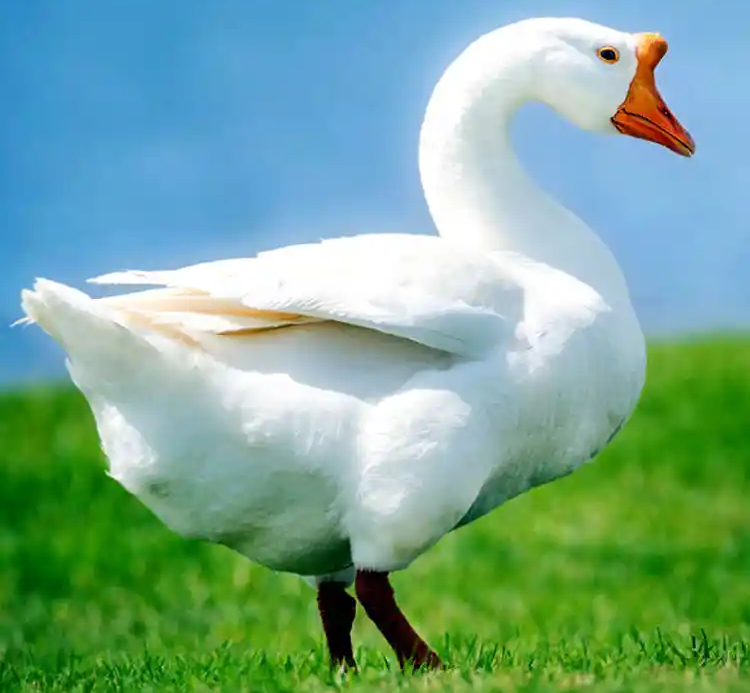
Characteristics of Goose Sound - Honking Calls & Waterfowl Vocalizations
Habitat
Wetlands, lakes, rivers, grasslands, and agricultural fields
Diet
Herbivore - grasses, grains, aquatic plants, and agricultural crops
Lifespan
10-24 years in the wild, up to 30 years in captivity
Weight
2.5-6.5 kg depending on species
Length
60-110 cm body length, 130-180 cm wingspan
Region
Worldwide across temperate and arctic regions
Goose Sound Characteristics
The goose sound is among the most distinctive and recognizable bird vocalizations in nature. From the loud, resonant honking goose sound used during migration to the soft murmuring goose sound of family groups, these social waterfowl use various goose sounds to coordinate flock movements, warn of danger, and maintain social bonds. Each goose sound serves a specific purpose in their highly organized social structure, making the goose sound repertoire essential for understanding their behavior and ecology.
Honking Call
The most iconic goose sound is the loud honking call, a powerful vocalization used for long-distance communication and flock coordination. This resonant goose sound is produced by forcing air through the syrinx while the neck is extended, creating the characteristic "ah-honk" or "ka-ronk" sound. The honking goose sound is particularly important during migration, helping geese maintain visual and acoustic contact in V-formation flights. This distinctive goose sound can carry over a mile in optimal conditions and serves as both a contact call and a territorial announcement.
200-1200 Hz
90-110 decibels
0.5-2 seconds
During flight, migration, territorial defense, and long-distance communication
Alarm Call
The alarm call is an urgent, loud goose sound produced when detecting predators or threats. This warning goose sound is typically a rapid series of short, sharp honks or a continuous loud calling that alerts the entire flock to danger. The alarm goose sound varies in intensity and pattern based on the type of threat—aerial predators trigger different alarm calls than ground-based threats. This critical goose sound can trigger immediate flight responses in the flock and is one of the most important survival vocalizations in the goose repertoire.
300-1500 Hz
95-115 decibels
0.3-1 second, rapidly repeated
When detecting predators, threats, or experiencing acute danger
Greeting Call
The greeting call is a friendly goose sound used when family members or flock mates reunite. This welcoming goose sound is softer and more melodic than alarm calls, often consisting of a series of gentle honks or murmurs. The greeting goose sound helps maintain social bonds within the flock and is particularly common when mates reunite after brief separations. This affiliative goose sound demonstrates the strong social nature of geese and their capacity for individual recognition within large flocks.
250-1000 Hz
70-85 decibels
0.5-1.5 seconds
When reuniting with mates, greeting flock members, or during social bonding
Contact Murmur
The contact murmur is a soft, continuous goose sound used for close-range communication within family groups. This gentle goose sound consists of low-volume clucks, murmurs, and soft honks that help maintain group cohesion while foraging or resting. The contact murmur goose sound is particularly important for keeping goslings close to parents and coordinating movements in dense vegetation. This intimate goose sound is quite different from the loud honking calls and reveals the nuanced communication system geese use at close range.
200-800 Hz
50-65 decibels
0.2-0.8 seconds, often continuous
While foraging, resting, or maintaining contact with family members
Gosling Distress Call
The gosling distress call is a high-pitched, urgent goose sound produced by young geese when separated from parents, cold, or frightened. This plaintive goose sound triggers immediate protective responses from parents and alerts them to the gosling's location and distress. The gosling distress goose sound is distinctly different from adult vocalizations and is designed to elicit rapid parental response. This critical goose sound ensures gosling survival during the vulnerable early weeks of life.
800-2500 Hz
75-90 decibels
0.3-1 second, continuously repeated
When goslings are separated, cold, frightened, or in danger
Triumph Ceremony Call
The triumph ceremony call is a distinctive goose sound performed by mated pairs and family groups after successfully defending territory or reuniting. This celebratory goose sound involves coordinated calling between mates, often with necks extended and wings partially spread. The triumph ceremony goose sound reinforces pair bonds and family cohesion, serving as both a territorial announcement and a social bonding ritual. This unique goose sound is one of the most complex vocalizations in the species and demonstrates their sophisticated social behavior.
300-1300 Hz
85-105 decibels
2-5 seconds, often in duets
After territorial defense, reuniting with mates, or successful confrontations
Hissing Threat
The hissing threat is an aggressive goose sound produced during close-range confrontations with intruders or predators. This intimidating goose sound is created by forcefully expelling air and is often accompanied by an open-bill threat display and wing spreading. The hissing goose sound serves as a final warning before physical attack and is highly effective at deterring threats. This defensive goose sound is particularly common during nesting season when geese are protecting eggs or goslings.
100-500 Hz (broadband noise)
70-90 decibels
1-3 seconds
During aggressive encounters, defending nests, or warning intruders at close range
Flight Intention Call
The flight intention call is a specific goose sound used to coordinate flock takeoffs and landings. This preparatory goose sound signals to other flock members that an individual is about to take flight, helping synchronize group movements. The flight intention goose sound increases in frequency and intensity as departure becomes imminent, allowing the flock to launch together. This coordinating goose sound is essential for maintaining flock cohesion and demonstrates the sophisticated communication system geese use for group coordination.
250-1100 Hz
80-95 decibels
0.4-1.2 seconds, increasing in rate
Before takeoff, during landing approaches, or coordinating flock movements
Contentment Cluck
The contentment cluck is a soft, rhythmic goose sound produced when geese are relaxed, comfortable, and feeding successfully. This peaceful goose sound consists of gentle clucking and murmuring that indicates the birds are in a positive state. The contentment cluck goose sound is often heard in family groups during calm foraging sessions and helps maintain a relaxed atmosphere within the flock. This gentle goose sound contrasts sharply with alarm calls and demonstrates the range of emotional states geese can vocally express.
200-700 Hz
45-60 decibels
0.2-0.5 seconds, repeated
While feeding peacefully, resting comfortably, or in relaxed social situations
Interesting Goose Sound - Honking Calls & Waterfowl Vocalizations Sound Facts
The goose sound during migration helps maintain the iconic V-formation by allowing birds to hear each other over wind noise
Geese can recognize individual flock members by their unique goose sound signatures
The honking goose sound is so loud that it can interfere with airport operations near wetlands
Baby geese learn their species-specific goose sound while still in the egg, listening to their parents
The goose sound repertoire is more complex in highly social species like Canada geese compared to more solitary species
Interesting Facts about Goose Sound - Honking Calls & Waterfowl Vocalizations Sound
The goose sound can be heard up to a mile away, making it one of the loudest bird vocalizations
Geese produce over 13 different types of goose sounds for various communication purposes
The honking goose sound helps flocks maintain formation during long migratory flights
Baby geese can recognize their parents' unique goose sound within 24 hours of hatching
The goose sound varies between species, with Canada geese having the most recognizable honk
Geese use specific alarm goose sounds that differ based on whether threats are aerial or ground-based
The goose sound intensity increases when defending territory or protecting goslings
Mated pairs of geese develop unique duet goose sounds for maintaining their lifelong bond
FAQs about Goose Sound - Honking Calls & Waterfowl Vocalizations Sound
Find answers to all your questions about Goose Sound - Honking Calls & Waterfowl Vocalizations sounds
Q What does a goose sound like?
A goose sound is most recognizable as a loud, resonant honking call that sounds like 'ah-honk,' 'ka-ronk,' or 'aah-ga.' This iconic goose sound is what most people associate with geese, especially during migration when flocks fly overhead in V-formation. However, the goose sound repertoire is much more diverse than just honking. Geese also produce soft murmuring and clucking goose sounds when communicating at close range with family members, gentle greeting calls when reuniting with mates, and aggressive hissing goose sounds when threatened. Goslings make high-pitched peeping sounds quite different from adult vocalizations. The specific goose sound varies by species—Canada geese have the classic deep honk, while snow geese produce higher-pitched, more nasal calls. The goose sound you hear depends on the context, species, and the bird's emotional state.
Q Why do geese honk so loudly?
Geese honk loudly for several important reasons related to their social nature and migratory lifestyle. The loud honking goose sound serves as a contact call that helps flock members maintain communication over long distances, which is crucial during migration when birds may be separated by hundreds of feet in V-formation. The powerful goose sound can carry over a mile, ensuring the flock stays coordinated even in adverse weather conditions. Geese also use loud honking goose sounds for territorial defense, warning other geese to stay away from their nesting areas or feeding grounds. The volume of the goose sound helps establish dominance and deter intruders without physical confrontation. Additionally, the loud goose sound serves as an alarm to warn the entire flock of predators or threats. The impressive volume of the goose sound—reaching up to 110 decibels—is produced by their specialized syrinx and resonating air sacs, making them one of the loudest bird species.
Q Do geese honk while flying?
Yes, geese frequently honk while flying, and this flying goose sound serves several critical functions. The honking goose sound during flight helps maintain flock cohesion and coordination, especially during long migratory journeys. Birds in the V-formation use honking goose sounds to communicate their position and maintain proper spacing, preventing collisions and optimizing the aerodynamic benefits of formation flying. The goose sound also helps birds coordinate leadership changes, as the lead position is rotated among flock members during long flights. Research suggests that the honking goose sound may provide encouragement to flock mates, similar to how cyclists in a pace line call out to each other. The flight goose sound increases in frequency during takeoffs, landings, and when navigating challenging conditions. The constant vocal communication through goose sounds is one reason why migrating geese are so noticeable—you often hear them before seeing them overhead.
Q How can you tell different goose species apart by their sounds?
Different goose species produce distinctive goose sounds that can be used for identification. Canada geese make the classic deep, resonant 'ah-honk' goose sound that most people recognize. Snow geese produce a higher-pitched, more nasal goose sound often described as 'kow-luk' or a yelping call. Greater white-fronted geese have a distinctive laughing or cackling goose sound, earning them the nickname 'specklebelly.' Brant geese make a softer, rolling 'cronk-cronk' goose sound quite different from the loud honking of Canada geese. Greylag geese produce a nasal 'aahng-ung-ung' goose sound. The pitch, tone, and rhythm of the goose sound vary significantly between species, reflecting differences in body size, habitat, and social structure. Experienced birders can identify goose species by sound alone, even when birds are flying overhead and difficult to see. Learning to distinguish goose sounds is a valuable skill for wildlife observation and monitoring.
Q Why do geese make noise at night?
Geese make noise at night for several important reasons related to their behavior and safety. Nighttime goose sounds often occur when flocks are roosting on water or in fields, and the vocalizations help maintain contact between flock members in darkness. If a predator approaches the roosting area, geese produce loud alarm goose sounds to warn the flock and deter the threat. During migration season, geese often fly at night to avoid daytime predators and take advantage of calmer air, and the honking goose sound helps maintain flock coordination in darkness. Geese may also produce goose sounds at night when disturbed by lights, noise, or other disturbances near their roosting sites. Urban geese that have adapted to city environments may vocalize at night in response to artificial lighting and human activity. The nighttime goose sound serves the same communication functions as daytime calls—maintaining contact, warning of danger, and coordinating group movements—but may seem more noticeable in the quiet of night.
Q Do baby geese make different sounds than adults?
Yes, baby geese (goslings) make distinctly different goose sounds compared to adults. Goslings produce high-pitched peeping and whistling goose sounds that are much softer and higher in frequency than adult honking. The gosling goose sound is used primarily to maintain contact with parents and siblings, especially when foraging in tall grass or vegetation where visual contact is limited. When distressed, separated, or cold, goslings produce urgent, continuous peeping goose sounds that trigger immediate parental response. As goslings mature, their goose sound gradually deepens and develops into adult vocalizations over several months. Young geese go through a 'voice change' period where their calls transition from juvenile peeps to adult honks. Interestingly, goslings begin learning their species-specific goose sound while still in the egg, listening to their parents' vocalizations through the shell. This early acoustic imprinting ensures that young geese develop the correct goose sound patterns for their species.
Q What does it mean when geese hiss?
When geese hiss, this aggressive goose sound is a clear warning that they feel threatened and are prepared to defend themselves. The hissing goose sound is produced by forcefully expelling air and is typically accompanied by an open-bill threat display, extended neck, and sometimes wing spreading. This intimidating goose sound serves as a final warning before the bird may attack by pecking or striking with its wings. Geese are most likely to produce hissing goose sounds during nesting season when protecting eggs or goslings, as they are extremely defensive parents. The hissing goose sound may also occur when geese are cornered, protecting food resources, or defending their territory from intruders—whether human, dog, or other animals. Unlike the honking goose sound used for communication, the hiss is specifically an aggressive, defensive vocalization. If you hear a hissing goose sound directed at you, it's best to slowly back away and give the bird space, as geese can be surprisingly aggressive when defending their territory or young.
Q How far away can you hear a goose sound?
The distance you can hear a goose sound depends on the type of vocalization and environmental conditions, but the loud honking goose sound can carry remarkably far. Under optimal conditions with minimal wind and background noise, the honking goose sound can be heard up to one mile away, making it one of the loudest and most far-carrying bird vocalizations. The alarm goose sound, being even louder and more urgent, may carry even farther. During migration, you can often hear the honking goose sound of flying flocks long before you can see them, sometimes when they're still several hundred feet in the air. Environmental factors significantly affect how far goose sounds travel—wind direction, terrain, vegetation, and ambient noise all play roles. In urban areas with traffic and other noise, the effective range of goose sounds is reduced. Softer goose sounds like contact murmurs and contentment clucks are designed for close-range communication and typically only carry 50-100 feet. The impressive carrying distance of the honking goose sound is due to the birds' powerful syrinx, resonating air sacs, and the low-frequency components of their calls.
Most Downloaded birds Animal Sounds
Discover our most popular birds animal sounds