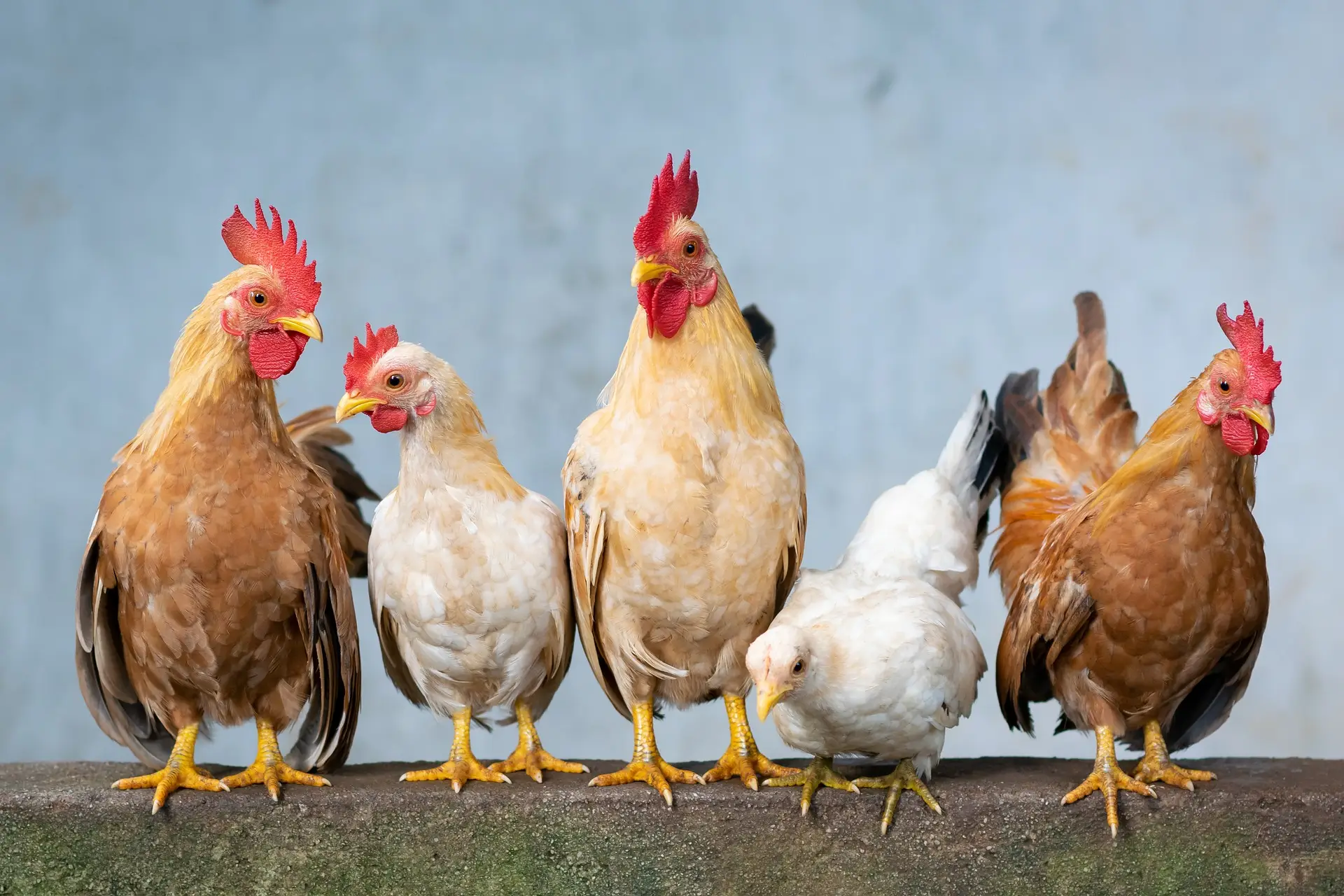
Characteristics of Chicken Sound - Clucks, Crows & Hen Vocalizations
Habitat
Farms, backyards, and rural areas worldwide
Diet
Omnivore - grains, seeds, insects, worms, and vegetation
Lifespan
5-10 years, with some breeds living longer
Weight
1.5-4 kg depending on breed and sex
Length
40-60 cm body length, 60-90 cm wingspan
Region
Domesticated worldwide, originally from Southeast Asia
Chicken Sound Characteristics
The chicken sound is remarkably diverse and sophisticated, reflecting complex social structures and communication needs. From the powerful crowing chicken sound of roosters announcing territory to the gentle clucking chicken sound of hens with their chicks, these birds use an extensive range of chicken sounds for daily communication. Each chicken sound serves specific purposes—alarm calls warn of predators, food calls announce discoveries, and contentment sounds maintain flock harmony. Understanding chicken sounds reveals the intelligence and social complexity of these familiar farm birds.
Rooster Crow
The rooster crow is the most iconic chicken sound, produced exclusively by male chickens to announce territory and establish dominance. This powerful chicken sound typically occurs at dawn but can happen throughout the day. The crowing chicken sound serves multiple purposes: marking territory, announcing the rooster's presence to hens, warning rival males, and responding to disturbances. Each rooster has a unique crowing chicken sound that other flock members can recognize. The crow chicken sound is produced by forcing air through the syrinx while the neck is fully extended, creating the characteristic "cock-a-doodle-doo" vocalization that can carry up to half a mile.
250-2000 Hz
90-100 decibels
2-4 seconds
Primarily at dawn, but also throughout the day to announce territory and respond to disturbances
Hen Cluck
The cluck is the most common chicken sound produced by hens, used for general communication and maintaining flock cohesion. This versatile chicken sound consists of short, rhythmic "cluck-cluck-cluck" vocalizations that vary in pitch and intensity based on context. The clucking chicken sound serves multiple purposes: maintaining contact with flock members while foraging, expressing contentment, and coordinating group movements. Mother hens use specific clucking chicken sounds to communicate with their chicks, with different patterns indicating safety, food availability, or the need to gather. The cluck chicken sound is softer than rooster crows but equally important for daily flock communication.
300-1500 Hz
60-75 decibels
0.2-0.5 seconds per cluck
Throughout the day during foraging, social interaction, and maternal communication
Alarm Call
The alarm call is an urgent chicken sound that warns the flock of immediate danger. Chickens produce different alarm chicken sounds depending on the type of threat—aerial predators trigger a distinctive high-pitched alarm, while ground predators elicit a different warning call. The aerial alarm chicken sound is typically a rapid, high-pitched series of calls that causes birds to freeze or seek cover immediately. The ground predator alarm chicken sound is lower-pitched and causes birds to become alert and move away from the threat. These specific alarm chicken sounds demonstrate the birds' ability to categorize threats and communicate detailed information to flock members.
800-3000 Hz (aerial), 400-1500 Hz (ground)
85-95 decibels
0.3-1 second, rapidly repeated
When detecting predators, threats, or sudden disturbances
Food Call
The food call is an excited chicken sound produced when a bird discovers food, especially high-value items like insects or treats. This enthusiastic chicken sound consists of rapid, staccato clucks that attract other flock members to the food source. Roosters often use food calling chicken sounds to attract hens, demonstrating both the food discovery and their provider role. The food call chicken sound varies in intensity based on the quality and quantity of food found. Mother hens use specific food calling chicken sounds to teach chicks what is edible and to encourage them to eat. This chicken sound demonstrates the birds' social nature and willingness to share resources with flock members.
400-2000 Hz
70-85 decibels
0.2-0.4 seconds, rapidly repeated
Upon discovering food, especially high-value items, and when teaching chicks to eat
Egg Song
The egg song is a distinctive chicken sound produced by hens after laying an egg. This proud announcement chicken sound is a loud, repetitive series of clucks and cackles that can last several minutes. The egg song chicken sound serves multiple purposes: announcing the successful laying, potentially confusing predators about nest location, and possibly signaling reproductive fitness to roosters. Other hens may join in with their own egg song chicken sounds, creating a chorus effect. This unique chicken sound is one of the most recognizable hen vocalizations and demonstrates the social nature of egg-laying behavior in chickens.
500-2500 Hz
75-90 decibels
30 seconds to 3 minutes
Immediately after laying an egg, sometimes joined by other hens
Chick Peep
The chick peep is a high-pitched chicken sound produced by baby chickens for communication with their mother and siblings. This constant peeping chicken sound helps chicks maintain contact with the hen and indicates their emotional state—content chicks produce soft, rhythmic peeps, while distressed chicks make louder, more urgent peeping chicken sounds. Chicks begin making this chicken sound even before hatching, communicating through the eggshell with their mother. The peeping chicken sound changes as chicks grow, gradually developing into adult vocalizations. Mother hens respond specifically to distress peeps, demonstrating the importance of this chicken sound for chick survival.
2000-4000 Hz
60-75 decibels
0.1-0.3 seconds, continuously repeated
Constantly by young chicks to maintain contact, more urgently when distressed or cold
Contentment Purr
The contentment purr is a soft, trilling chicken sound produced when birds are relaxed and comfortable. This gentle chicken sound is similar to a cat's purr but with a more vibrating, rattling quality. The purring chicken sound is most commonly heard when chickens are dust bathing, roosting peacefully, or being gently handled. This soothing chicken sound indicates the bird is in a positive emotional state and feels safe. Hens often make purring chicken sounds while brooding eggs or settling with chicks under their wings. The contentment purr chicken sound demonstrates the birds' capacity to express emotional well-being through vocalizations.
200-800 Hz
45-60 decibels
1-5 seconds, often continuous
While dust bathing, roosting, being handled gently, or in comfortable situations
Distress Scream
The distress scream is a loud, piercing chicken sound produced when a bird is caught, injured, or in extreme fear. This urgent chicken sound is distinctly different from all other vocalizations and triggers immediate alarm responses in the entire flock. The distress scream chicken sound is designed to startle predators and alert flock members to serious danger. This chicken sound can also attract roosters or dominant hens who may attempt to defend the distressed bird. The distress scream chicken sound is one of the loudest vocalizations chickens produce and indicates a life-threatening situation requiring immediate response.
1000-4000 Hz
95-105 decibels
1-3 seconds, may be repeated
When caught by predators, seriously injured, or in extreme fear or pain
Roosting Call
The roosting call is a soft, murmuring chicken sound produced as birds settle for the night. This gentle chicken sound helps flock members coordinate roosting positions and maintain contact in darkness. The roosting call chicken sound consists of soft clucks, murmurs, and occasional trills as birds adjust their positions and settle comfortably. This peaceful chicken sound gradually quiets as birds fall asleep. The roosting call chicken sound demonstrates the importance of vocal communication in maintaining flock cohesion even during rest periods. Dominant birds may use specific roosting chicken sounds to claim preferred positions.
300-1200 Hz
50-65 decibels
0.3-1 second, intermittent
At dusk as birds settle for the night, continuing until they fall asleep
Interesting Chicken Sound - Clucks, Crows & Hen Vocalizations Sound Facts
The rooster crow chicken sound is triggered by internal circadian rhythms, not just by sunrise
Chickens can distinguish between different individual chicken sounds, recognizing up to 100 flock members
The alarm chicken sound for aerial predators causes immediate freezing, while ground predator alarms trigger running
Mother hens begin teaching chicks specific chicken sounds while they're still in the egg
The egg song chicken sound may have evolved to confuse predators about the actual nest location
Interesting Facts about Chicken Sound - Clucks, Crows & Hen Vocalizations Sound
Chickens produce over 30 different types of chicken sounds for various communication purposes
The rooster crow chicken sound can be heard up to half a mile away in quiet conditions
Hens make specific chicken sounds to call their chicks and warn of different types of predators
Baby chicks begin making chicken sounds while still inside the egg, communicating with their mother
The chicken sound repertoire includes alarm calls that distinguish between aerial and ground predators
Mother hens use over 24 different chicken sounds to communicate with their chicks
Chickens can recognize individual flock members by their unique chicken sound signatures
The chicken sound varies significantly between breeds, with some producing louder or more frequent calls
FAQs about Chicken Sound - Clucks, Crows & Hen Vocalizations Sound
Find answers to all your questions about Chicken Sound - Clucks, Crows & Hen Vocalizations sounds
Q What does a chicken sound like?
A chicken sound varies significantly depending on the bird's sex, age, and situation. The most iconic chicken sound is the rooster's crow, which sounds like 'cock-a-doodle-doo' and can be heard up to half a mile away. Hens produce clucking chicken sounds—rhythmic 'cluck-cluck-cluck' vocalizations used for general communication. The egg song chicken sound is a loud, repetitive cackling produced after laying eggs. Chickens also make alarm chicken sounds that differ based on threat type—high-pitched rapid calls for aerial predators and lower-pitched warnings for ground threats. Baby chicks produce constant peeping chicken sounds to maintain contact with their mother. Chickens make food calling chicken sounds when discovering treats, contentment purring chicken sounds when relaxed, and distress screams when in danger. The specific chicken sound you hear depends on the bird's activity, emotional state, and what they're trying to communicate.
Q Why do roosters crow in the morning?
Roosters crow in the morning due to internal circadian rhythms that trigger the crowing chicken sound at dawn, though this iconic chicken sound can occur throughout the day. The morning crow chicken sound serves multiple important purposes: announcing territory to rival roosters, signaling the rooster's presence to hens, and establishing dominance within the flock. The dawn crowing chicken sound is triggered by the rooster's internal biological clock, not directly by sunrise—roosters will crow at their usual time even in complete darkness. This territorial chicken sound warns other roosters to stay away and reassures the flock that their protector is alert. The morning crow chicken sound can also be triggered by disturbances like lights, noises, or other roosters crowing nearby. While the dawn crow is most prominent, roosters produce this chicken sound multiple times daily, with the morning crow being the loudest and most persistent due to peak testosterone levels and the need to re-establish territory after the night.
Q Do hens make different sounds than roosters?
Yes, hens make distinctly different chicken sounds compared to roosters, with their own specialized vocal repertoire. Hens do not produce the crowing chicken sound—this is exclusive to roosters. Instead, hens are known for their clucking chicken sounds, which are softer and more varied than rooster vocalizations. The egg song chicken sound is a distinctive hen vocalization—a loud, proud cackling produced after laying eggs. Hens make specific maternal chicken sounds when communicating with chicks, including food calls, gathering calls, and comfort sounds. The alarm chicken sound produced by hens is often more urgent and detailed than rooster alarms, as hens are typically more vigilant about protecting chicks. Hens produce contentment purring chicken sounds when brooding or relaxed. While roosters focus on territorial and dominance vocalizations, hen chicken sounds are more focused on social communication, maternal care, and flock coordination. Both sexes produce alarm calls and food calls, but with different frequencies and purposes.
Q What does it mean when chickens make alarm sounds?
When chickens make alarm sounds, these urgent chicken sounds warn the flock of immediate danger and trigger specific defensive responses. Chickens produce different alarm chicken sounds depending on the type of threat they detect. The aerial predator alarm chicken sound is a high-pitched, rapid series of calls that causes birds to immediately freeze, crouch, or run for cover—this chicken sound warns of hawks, eagles, or other flying threats. The ground predator alarm chicken sound is lower-pitched and causes birds to become alert, gather together, and move away from the threat while maintaining visual contact. These specific alarm chicken sounds demonstrate that chickens can categorize threats and communicate detailed danger information to flock members. When you hear an alarm chicken sound, it means a bird has detected a potential predator, unusual disturbance, or perceived threat. The entire flock responds immediately to alarm chicken sounds, showing the critical survival importance of these vocalizations.
Q Why do hens cackle after laying eggs?
Hens cackle after laying eggs, producing the distinctive egg song chicken sound for several possible evolutionary and behavioral reasons. This loud, repetitive chicken sound may serve to confuse predators about the actual nest location—by moving away from the nest while cackling, the hen draws attention away from vulnerable eggs. The egg song chicken sound may also announce reproductive success to the rooster, potentially signaling fitness and availability for mating. Some researchers believe this chicken sound helps synchronize laying times among hens in the flock, as other hens often join in with their own egg songs. The cackling chicken sound may simply be an expression of relief or accomplishment after the physical effort of laying. This chicken sound also reinforces social bonds, as the communal response creates flock cohesion. The egg song chicken sound is one of the most distinctive hen vocalizations and demonstrates the complex social and survival strategies embedded in chicken communication.
Q Can chickens recognize individual birds by their sounds?
Yes, chickens can recognize individual birds by their unique chicken sound signatures, demonstrating sophisticated auditory discrimination abilities. Each chicken produces slightly different chicken sounds with subtle variations in pitch, tone, rhythm, and quality that serve as vocal fingerprints. Research shows chickens can distinguish between the chicken sounds of up to 100 individual flock members. Mother hens can identify their specific chicks' peeping chicken sounds even in large mixed broods, allowing targeted maternal care. Roosters recognize rival males by their crowing chicken sounds and can assess dominance without visual contact. Hens can distinguish between different roosters' chicken sounds, potentially using these vocalizations to assess male quality. This individual recognition through chicken sounds is crucial for maintaining complex social hierarchies, coordinating flock activities, and managing relationships within the group. The ability to recognize individual chicken sounds demonstrates the cognitive sophistication of these birds and the importance of vocal communication in their social structure.
Q Do baby chicks make sounds before hatching?
Yes, baby chicks begin making chicken sounds even before hatching, communicating through the eggshell with their mother and siblings. Starting about 24 hours before hatching, chicks produce soft peeping chicken sounds from inside the egg that the mother hen can hear and respond to. These pre-hatching chicken sounds serve multiple important purposes: they help synchronize hatching times among the clutch, allow the mother to recognize her chicks' voices before they emerge, and enable chicks to begin learning their mother's chicken sounds. The mother hen responds to these pre-hatching chicken sounds by making soft clucking calls back to the eggs, establishing vocal communication before the chicks even hatch. This early chicken sound communication is crucial for imprinting and helps chicks recognize their mother's voice immediately upon hatching. Research shows that chicks exposed to specific chicken sounds before hatching show preferences for those sounds after emerging, demonstrating that vocal learning begins in the egg.
Q How do chickens use sounds to find food?
Chickens use food calling chicken sounds to share food discoveries and coordinate foraging activities within the flock. When a chicken finds food, especially high-value items like insects, seeds, or treats, it produces excited, rapid food calling chicken sounds that attract other flock members to the location. Roosters frequently use food calling chicken sounds to attract hens, demonstrating both the food discovery and their provider role—this chicken sound can be part of courtship behavior. Mother hens use specific food calling chicken sounds to teach chicks what is edible and to encourage them to try new foods. The intensity of the food calling chicken sound varies based on food quality—better food triggers more enthusiastic calls. Interestingly, roosters may produce food calling chicken sounds even without food present when trying to attract hens, showing that these chicken sounds can be used strategically. The food calling chicken sound demonstrates the cooperative and social nature of chicken foraging behavior.
Most Downloaded birds Animal Sounds
Discover our most popular birds animal sounds