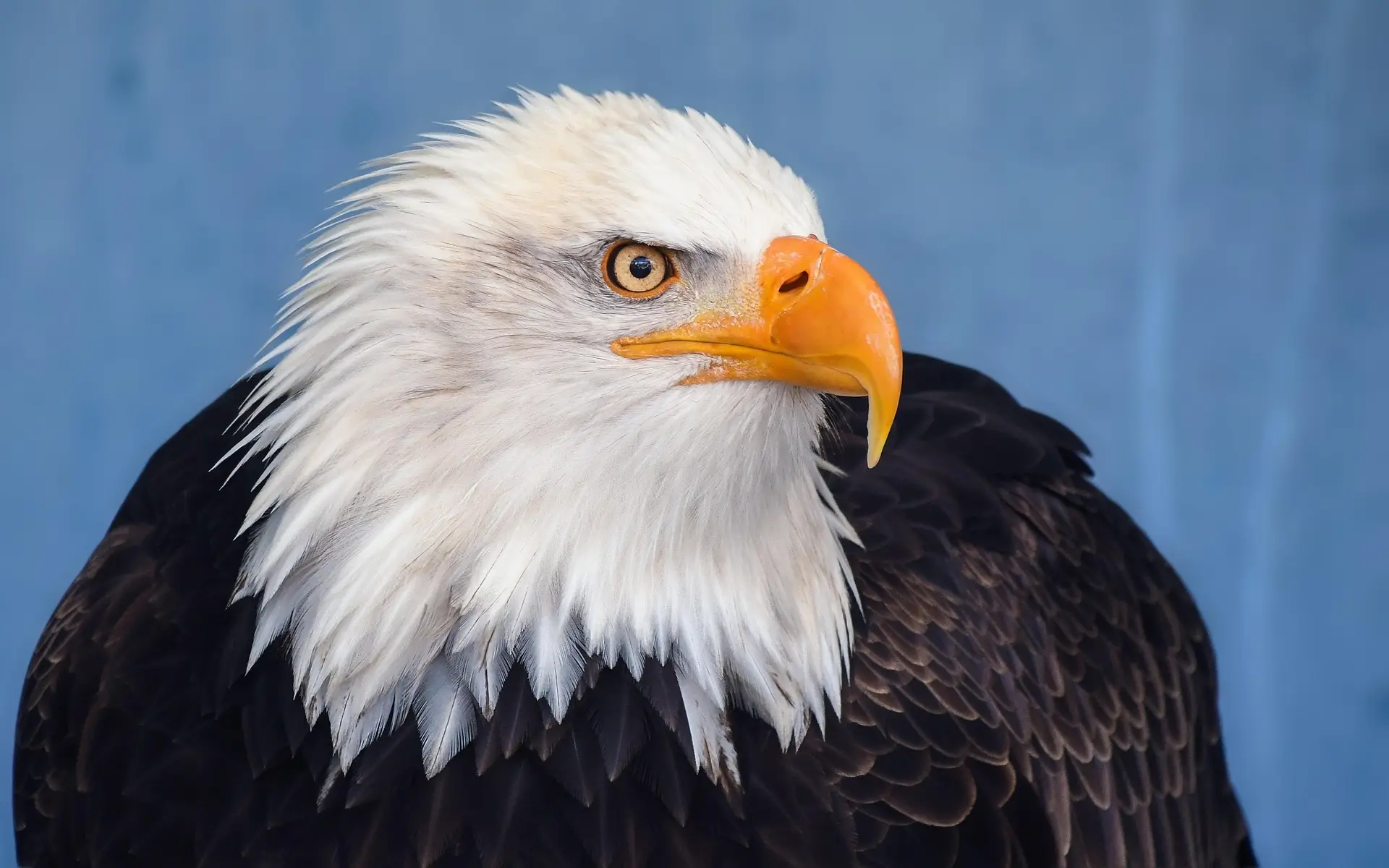
Characteristics of Bald Eagle Sound - Powerful Screams & Raptor Calls
Habitat
Near large bodies of water including coasts, lakes, and rivers
Diet
Carnivore - primarily fish, also waterfowl, small mammals, and carrion
Lifespan
20-30 years in the wild, up to 50 years in captivity
Weight
3-6.3 kg (males smaller, females larger)
Length
70-102 cm body length, 180-230 cm wingspan
Region
North America from Alaska and Canada to northern Mexico
Bald Eagle Sound Characteristics
The bald eagle sound is surprisingly varied and less dramatic than popular media portrays. While movies often dub bald eagle sounds with the more impressive screams of red-tailed hawks, the actual bald eagle sound repertoire includes chattering calls, chirps, and whistling notes that are quite different from the fierce screams commonly associated with these birds. The bald eagle sound serves important functions in territorial defense, courtship, parent-offspring communication, and social interactions. Each bald eagle sound type conveys specific information about the bird's intentions and emotional state, making vocalizations crucial for their survival and reproduction.
Peal Call
The peal call is the most common bald eagle sound, consisting of a series of high-pitched, stuttering notes that sound like "klee-kik-ik-ik-ik." This distinctive bald eagle sound is often described as weak or chattering compared to the powerful screams portrayed in movies. The peal call bald eagle sound is used in various contexts including territorial announcements, alarm calls, and general communication between eagles. This bald eagle sound is produced by both males and females, though females typically have lower-pitched voices. The peal call bald eagle sound can vary in intensity and duration depending on the situation, from brief single calls to extended sequences lasting several seconds. This is the authentic bald eagle sound most commonly heard near nests and perching sites.
2000-4000 Hz
80-95 decibels
1-3 seconds
During territorial displays, alarm situations, general communication, and near nesting sites
Chatter Call
The chatter call is a rapid, repetitive bald eagle sound used primarily during aggressive encounters and territorial disputes. This intense bald eagle sound consists of quick, staccato notes that sound like "kik-kik-kik-kik" delivered in rapid succession. The chattering bald eagle sound is often accompanied by aggressive posturing including raised head feathers, open beak displays, and wing spreading. This bald eagle sound escalates in speed and intensity as aggression increases, potentially leading to physical confrontation if the intruder doesn't retreat. The chatter call bald eagle sound is commonly heard when eagles are defending nest sites, food sources, or prime perching locations. Both members of a mated pair may produce chattering bald eagle sounds simultaneously when defending their territory.
2500-4500 Hz
85-100 decibels
2-10 seconds of continuous chattering
During territorial disputes, aggressive encounters, nest defense, and confrontations with intruders
Chirp Call
The chirp call is a softer, more melodious bald eagle sound used during courtship and between mated pairs. This gentle bald eagle sound consists of clear, whistling notes that are quite different from the harsh chattering calls. The chirping bald eagle sound is often exchanged between mates during nest building, incubation, and chick-rearing activities. This bald eagle sound helps maintain pair bonds and coordinate parental duties. The chirp call bald eagle sound may also be used as a greeting when mates reunite after separation. This softer bald eagle sound demonstrates the more tender side of these powerful predators and is essential for successful breeding.
1500-3500 Hz
65-80 decibels
0.5-2 seconds
During courtship, between mated pairs, nest activities, and greeting behaviors
Begging Call
The begging call is a distinctive bald eagle sound produced by nestlings and fledglings when soliciting food from parents. This insistent bald eagle sound consists of high-pitched, repetitive chirps that increase in intensity when parents approach with food. The begging call bald eagle sound triggers feeding responses in adult eagles and communicates the young bird's hunger level. As eaglets grow, their begging bald eagle sounds deepen and become more adult-like. Even after fledging, young eagles continue producing begging bald eagle sounds when dependent on parents for food. This developmental bald eagle sound is crucial for chick survival and parent-offspring communication.
2500-5000 Hz
75-90 decibels
0.3-1 second, continuously repeated
By nestlings and fledglings when hungry or when parents approach with food
Alarm Scream
The alarm scream is a loud, urgent bald eagle sound produced when adults detect serious threats near the nest. This warning bald eagle sound is more intense and sustained than typical peal calls, conveying immediate danger to the mate and offspring. The alarm scream bald eagle sound may trigger defensive behaviors including nest guarding, aggressive displays toward intruders, or evacuation of young birds. This bald eagle sound is particularly common during the nesting season when adults are highly protective of eggs and chicks. The alarm scream bald eagle sound can alert other eagles in the area to potential dangers, creating a neighborhood watch effect.
2000-4500 Hz
90-105 decibels
2-5 seconds
When detecting serious threats near nests, during predator encounters, or when protecting young
Conk-la-ree Call
The conk-la-ree call is a complex bald eagle sound produced during courtship displays and territorial announcements. This elaborate bald eagle sound consists of multiple notes delivered in a specific pattern that sounds like "conk-la-ree" or similar variations. The conk-la-ree bald eagle sound is often accompanied by dramatic flight displays including cartwheeling, talon-grappling, and synchronized flying between mates. This impressive bald eagle sound and display combination strengthens pair bonds and announces territory ownership. The conk-la-ree bald eagle sound is most frequently heard during the breeding season and is one of the more complex vocalizations in the eagle's repertoire.
1500-4000 Hz
85-100 decibels
2-4 seconds
During courtship displays, territorial announcements, and pair bonding activities
Soft Whistle
The soft whistle is a quiet, intimate bald eagle sound used during close-range interactions between mates and with young chicks. This gentle bald eagle sound consists of low-volume, melodious whistles that convey contentment and affection. The soft whistle bald eagle sound is often heard during nest exchanges when one parent relieves the other from incubation duties. This tender bald eagle sound may also be directed toward small chicks as a comforting vocalization. The soft whistle bald eagle sound demonstrates the nurturing behaviors of these powerful predators and is rarely heard except by observers very close to active nests.
1000-2500 Hz
50-65 decibels
0.5-1.5 seconds
During intimate mate interactions, nest exchanges, and when comforting young chicks
Juvenile Squeal
The juvenile squeal is a transitional bald eagle sound produced by young eagles as they develop from nestlings to independent adults. This intermediate bald eagle sound is higher-pitched and less refined than adult calls, representing the vocal development stage. The juvenile squeal bald eagle sound is commonly heard from fledglings learning to hunt and interact with other eagles. This developing bald eagle sound gradually matures over the first year of life as the young eagle's syrinx develops and they learn proper vocalization techniques. The juvenile squeal bald eagle sound helps identify young, inexperienced birds and may reduce aggression from territorial adults.
2500-5500 Hz
70-85 decibels
0.5-2 seconds
By juvenile eagles during their first year, especially during learning and social interactions
Duet Call
The duet call is a coordinated bald eagle sound produced by mated pairs in synchronized calling. This cooperative bald eagle sound involves both eagles vocalizing in alternating or overlapping patterns, creating a complex auditory display. The duet call bald eagle sound strengthens pair bonds and announces the presence of an established breeding pair to potential intruders. This synchronized bald eagle sound is most common during nest building and early breeding season. The duet call bald eagle sound demonstrates the strong partnership between mates and their ability to coordinate behaviors. This impressive bald eagle sound can continue for extended periods during territorial displays.
1500-4500 Hz (overlapping male and female frequencies)
85-100 decibels
3-15 seconds of coordinated calling
During pair bonding, territorial displays, nest building, and coordinated defense
Interesting Bald Eagle Sound - Powerful Screams & Raptor Calls Sound Facts
The bald eagle sound in movies is usually actually a red-tailed hawk scream because it sounds more dramatic
Female bald eagles have lower-pitched bald eagle sounds than males due to their larger size
Bald eagles can recognize their mate's unique bald eagle sound even in noisy environments
The chattering bald eagle sound can last for several minutes during intense territorial disputes
Young bald eagles practice their bald eagle sounds for months before developing adult vocalizations
Interesting Facts about Bald Eagle Sound - Powerful Screams & Raptor Calls Sound
The bald eagle sound is often dubbed over with red-tailed hawk screams in movies for dramatic effect
Bald eagles produce over 7 different types of bald eagle sounds for various communication purposes
The chattering bald eagle sound near nests can continue for several minutes during territorial displays
Young bald eagles develop their adult bald eagle sound gradually over their first year of life
The bald eagle sound during courtship includes unique duetting between mated pairs
Bald eagle sounds can be heard up to a mile away in open terrain
The peal call bald eagle sound is the most commonly heard vocalization from these raptors
Bald eagles use specific alarm bald eagle sounds to warn their young of approaching threats
FAQs about Bald Eagle Sound - Powerful Screams & Raptor Calls Sound
Find answers to all your questions about Bald Eagle Sound - Powerful Screams & Raptor Calls sounds
Q What does a bald eagle sound like?
A bald eagle sound is surprisingly different from what most people expect based on movies and television. The authentic bald eagle sound is not the powerful, dramatic scream often portrayed in media—that's usually a red-tailed hawk. The real bald eagle sound is much weaker and more chattering in quality. The most common bald eagle sound is the peal call, which consists of high-pitched, stuttering notes that sound like 'klee-kik-ik-ik-ik.' This distinctive bald eagle sound has been described as weak, chirping, or chattering. Bald eagles also produce chatter calls during aggressive encounters—rapid 'kik-kik-kik' sounds that escalate during territorial disputes. The chirp call bald eagle sound is softer and more melodious, used between mates during courtship and nesting activities. Young eagles produce begging bald eagle sounds—high-pitched, insistent chirps when soliciting food. The specific bald eagle sound you hear depends on the context, the bird's age, and the situation.
Q Why do movies use different sounds for bald eagles?
Movies and television shows typically replace the authentic bald eagle sound with the more dramatic scream of a red-tailed hawk because the real bald eagle sound doesn't match the fierce, powerful image these birds represent. The actual bald eagle sound is relatively weak and chattering, which filmmakers feel doesn't convey the majesty and power associated with America's national symbol. The red-tailed hawk produces a piercing, dramatic scream that better fits audience expectations of how a powerful predator should sound. This substitution has become so common that most people believe the hawk's scream is the real bald eagle sound. The authentic bald eagle sound—the stuttering peal call and chattering vocalizations—would seem anticlimactic in dramatic film scenes. This disconnect between the real bald eagle sound and public perception has created widespread misconception about how these magnificent birds actually vocalize. Understanding the true bald eagle sound helps appreciate these birds for what they actually are rather than Hollywood's dramatized version.
Q Do male and female bald eagles sound different?
Yes, male and female bald eagles produce noticeably different bald eagle sounds due to their size difference—females are significantly larger than males. Female bald eagles produce lower-pitched bald eagle sounds because their larger body size and vocal apparatus create deeper tones. The female bald eagle sound is typically more robust and resonant compared to the higher-pitched male calls. This size-related difference in bald eagle sounds allows eagles to identify the sex of calling birds from a distance. During duet calling, the pitch difference between male and female bald eagle sounds creates a distinctive two-toned effect. Experienced observers can distinguish male from female bald eagle sounds even without seeing the birds. The lower-pitched female bald eagle sound may carry slightly farther than male calls due to the physics of sound propagation. This sexual dimorphism in bald eagle sounds is consistent across all vocalization types—peals, chatters, and chirps all show the male-female pitch difference.
Q When are bald eagles most vocal?
Bald eagles are most vocal during the breeding season when territorial defense, courtship, and parental care activities peak. The frequency of bald eagle sounds increases dramatically from late winter through spring as pairs establish territories, build nests, and raise young. During this period, bald eagle sounds including peal calls, chatter calls, and duet calls are heard frequently throughout the day. The bald eagle sound activity is particularly intense near active nests where adults communicate with each other and with their offspring. Territorial disputes trigger extended bouts of chattering bald eagle sounds as birds defend prime nesting sites. Parent eagles produce various bald eagle sounds when bringing food to nestlings and when coordinating nest duties. Outside the breeding season, bald eagles are generally quieter, though they still produce bald eagle sounds during feeding aggregations and social interactions. Dawn and dusk often see increased bald eagle sound activity as birds establish daily territories and settle for roosting.
Q How do young bald eagles learn their calls?
Young bald eagles develop their bald eagle sounds through a combination of innate programming and learning from adult birds. Nestling eagles begin producing simple begging bald eagle sounds instinctively when hungry, triggering feeding responses from parents. As they grow, young eagles listen to adult bald eagle sounds and gradually refine their own vocalizations through practice and imitation. The juvenile bald eagle sound is initially higher-pitched and less refined than adult calls, representing a developmental stage. Young eagles practice their bald eagle sounds extensively during their first year, gradually developing the full adult repertoire. The learning process for bald eagle sounds involves trial and error as juveniles experiment with different vocalizations in various contexts. Social interactions with other eagles provide feedback that helps young birds refine their bald eagle sounds. By their second year, most eagles have developed mature bald eagle sounds that closely match adult vocalizations. The development of proper bald eagle sounds is crucial for successful territorial defense and breeding once birds reach maturity.
Q Can bald eagles recognize individual birds by their calls?
Yes, bald eagles can recognize individual birds by their unique bald eagle sound signatures, particularly between mated pairs. Each eagle produces slightly different bald eagle sounds with subtle variations in pitch, tone, rhythm, and quality that serve as vocal fingerprints. Mated pairs develop familiarity with each other's specific bald eagle sounds over years of partnership, allowing them to identify their mate even in noisy environments with multiple eagles present. This individual recognition through bald eagle sounds is crucial for coordinating nest duties, maintaining pair bonds, and responding appropriately to their mate's calls. Parent eagles can distinguish their offspring's begging bald eagle sounds from those of other young birds, ensuring they feed their own chicks. Eagles also recognize the bald eagle sounds of neighboring territorial birds, responding differently to familiar neighbors versus unknown intruders. This ability to identify individual bald eagle sounds demonstrates the cognitive sophistication of these raptors and the importance of vocal communication in their social structure.
Q What does the chattering bald eagle sound mean?
The chattering bald eagle sound is an aggressive vocalization produced during territorial disputes, confrontations, and defensive situations. This rapid, staccato bald eagle sound—consisting of quick 'kik-kik-kik-kik' notes—signals that the eagle is agitated and prepared to defend its territory, nest, or food source. The chattering bald eagle sound escalates in speed and intensity as aggression increases, serving as a warning to intruders before physical confrontation occurs. This aggressive bald eagle sound is commonly heard when eagles are defending prime nesting sites from rival pairs or when protecting food sources from other predators. Both members of a mated pair may produce synchronized chattering bald eagle sounds when jointly defending their territory. The duration of the chattering bald eagle sound can extend for several minutes during intense standoffs, with birds sometimes chattering while engaged in aerial combat or ground confrontations. Hearing this bald eagle sound indicates high tension and the possibility of aggressive interactions between birds.
Q Do bald eagles make sounds while hunting?
Bald eagles are generally silent while hunting, as vocalizations would alert prey and reduce hunting success. The bald eagle sound repertoire is primarily used for social communication, territorial defense, and reproductive activities rather than during predatory behavior. Silent hunting allows eagles to approach prey—fish, waterfowl, or small mammals—without warning. However, bald eagles may produce bald eagle sounds after successfully capturing prey, particularly if other eagles are nearby and might attempt to steal the catch. The food call bald eagle sound may be used to announce a large food source to a mate or offspring. During cooperative hunting or when teaching young eagles to hunt, adults might produce specific bald eagle sounds to coordinate activities or provide instruction. At communal feeding sites where multiple eagles gather, various bald eagle sounds including chatters and peals are common as birds establish feeding hierarchies and defend their portions. The general rule is that hunting bald eagles are quiet, while feeding bald eagles are vocal.
Most Downloaded birds Animal Sounds
Discover our most popular birds animal sounds